 The Nine Doctors pathway from medical training to community care317
PBRI SUSTAINABILITY
Case Studies
The PBRI Model connects health colleges with communities
Praboromarajchanok Institute links health education with prevention through its One College One Community approach. Local work in Suphan Buri and research with nursing students show how screening and health promotion can be put into practice.
Connecting education with care close to home
The PBRI Model brings the institute’s health colleges into community partnerships. Its 2022 annual report describes combining a seven colour health risk classification approach with attention to diet, physical activity and emotional wellbeing, alongside reducing alcohol, smoking and obesity. Community health promotion is therefore connected to the institute’s educational and academic service responsibilities, rather than presented only as a separate outreach activity.
From screening to home visits in Suphan Buri
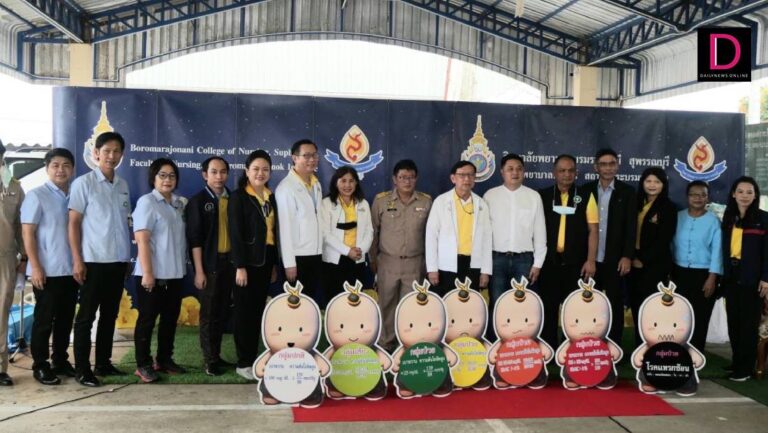
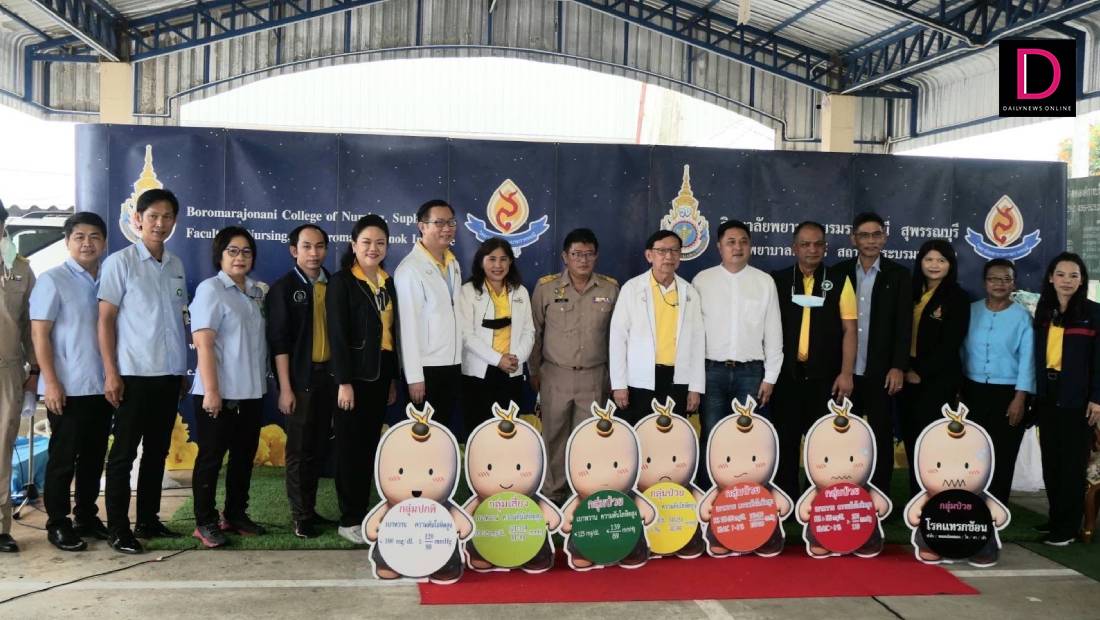
At Ban Kilo Paet in Sanam Chai, Suphan Buri, the local Boromarajonani College of Nursing worked with Sanam Chai Subdistrict Health Promoting Hospital. A report dated 29 September 2022 describes health education, risk classification, behaviour change activities and home visits within the 2022–2024 programme.
The college also reported developing a database linked to LINE to support diabetes and hypertension prevention and monitoring. This example connects information, local services and household support. The news report documents activities and tools; it does not provide a population wide evaluation of disease reduction.
Evidence from nursing students
A study published on 12 October 2023 involved 529 nursing students at Srimahasarakham Nursing College. Using a single group before and after design, researchers reported statistically significant decreases in average waist circumference and blood pressure after PBRI Model health promotion activities, while average body mass index did not change significantly. These findings concern the students studied. Without a comparison group, the design cannot establish that the programme alone caused the changes or demonstrate equivalent outcomes in every participating community.
Tracking participation alongside health outcomes
The institute’s six month progress report for fiscal year 2024 recorded 75 communities under its indicator for strong communities emphasising participation, against an annual target of 44. It also described integrating the PBRI Model into college missions. This is an institutional activity indicator, distinct from the number of individual beneficiaries or measured reductions in health risk.
An official closing ceremony report for fiscal year 2025 also connects the model with student development in community health promotion. Together, these examples show an approach spanning education, local service partnerships and health monitoring. Assessing its longer term effect requires outcome data tied to clearly defined populations and reporting periods.