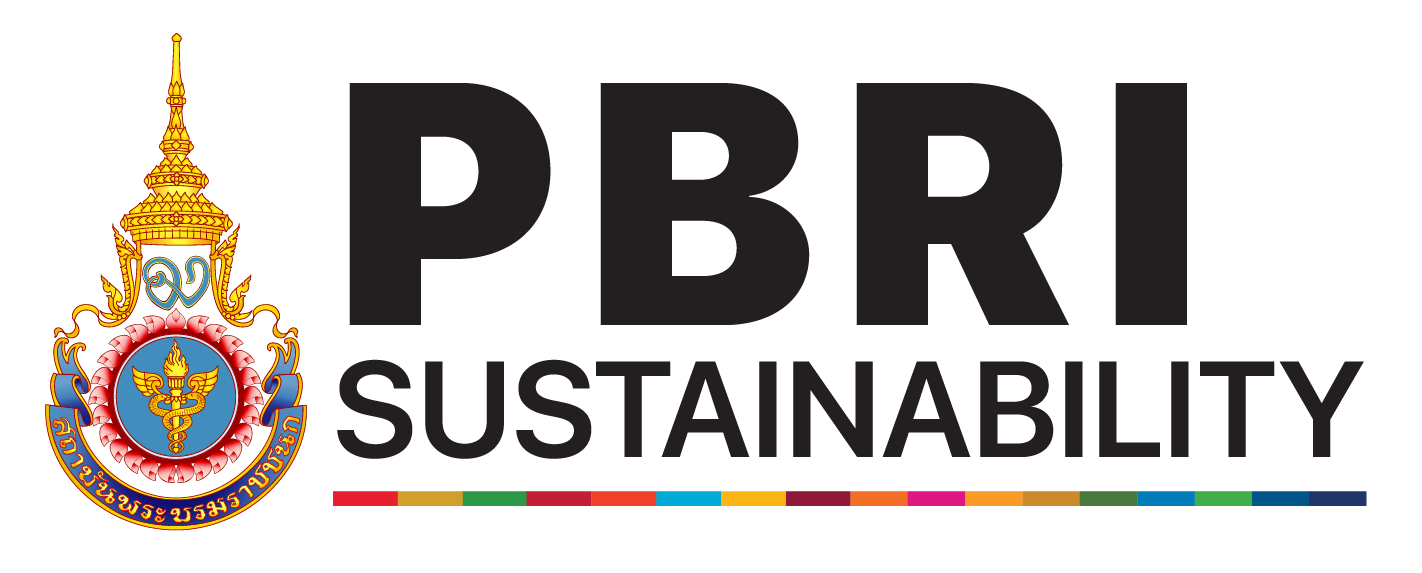

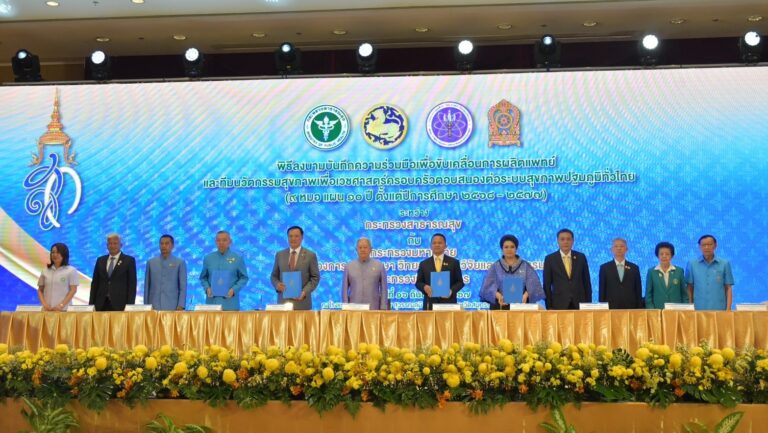
 The Nine Doctors pathway from medical training to community care317
PBRI SUSTAINABILITY
SDG 17
Partnerships for the Goals
Strengthen the means of implementation and revitalize the global partnership for sustainable development.
17
GOAL
17.2 RELATIONSHIPS TO SUPPORT THE GOALS
17.2.1 Relationships with regional NGOs and government for SDG policy
Praboromarajchanok Institute Ministry of Public Health Commitment to SDG Policy Engagement Policy to Promote the Royal Institution to a World-Class University for Primary Care
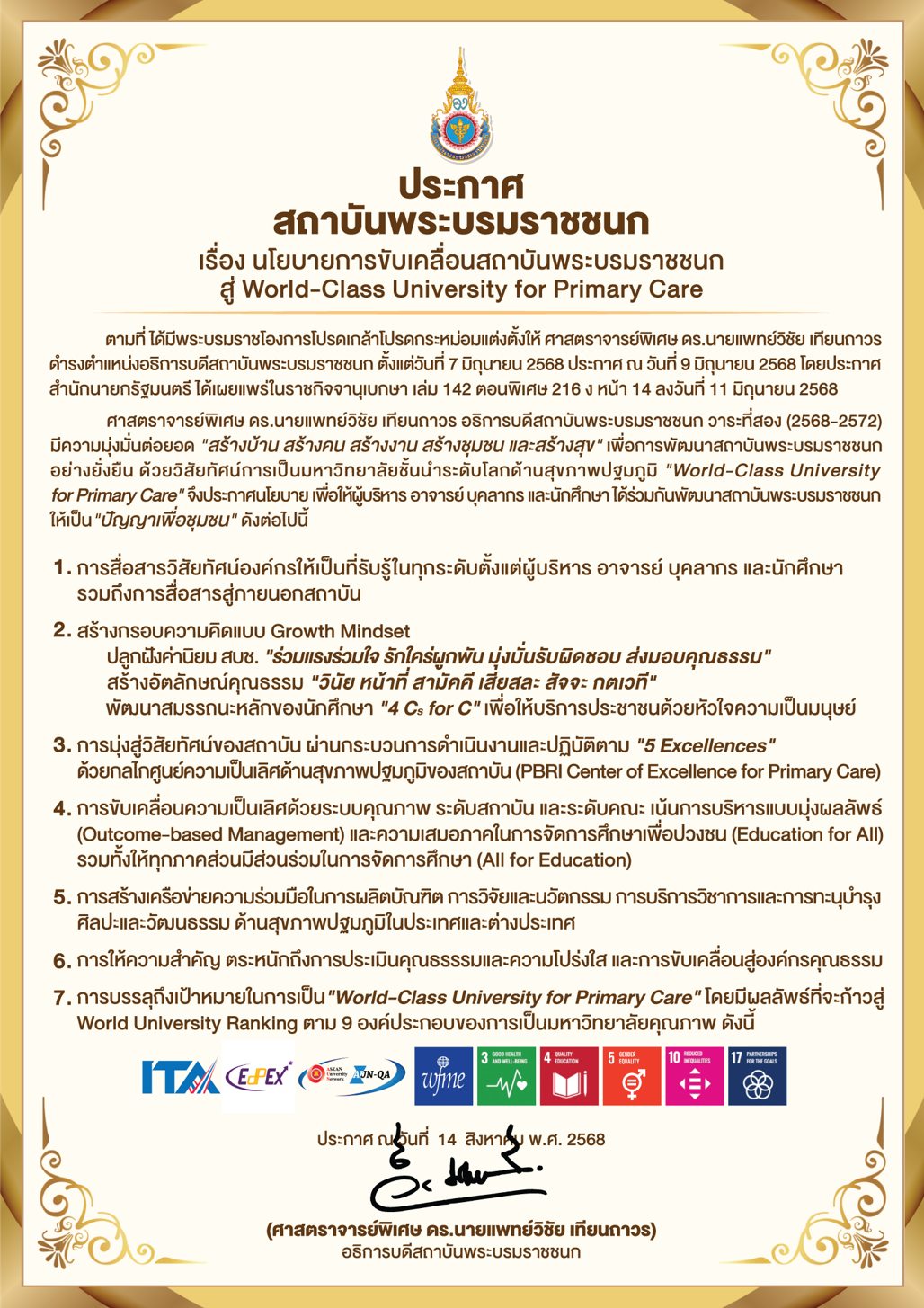
Announcement of the Royal Institution of Primary Care
Policy to Promote the Royal Institution to a World-Class University for Primary Care
According to the Royal Decree of His Majesty the King, Special Professor Dr. Dr. Wichai Thianthavorn has been the President of the Royal Institution since June 7, 2025, announced on June 9, 2025 by the Prime Minister’s Office Announcement published in the Royal Gazette, Volume 142, Special Part 216, Page 14, dated June 11, 2025. Special Professor Dr. Dr. Wichai Thianthavorn The President of the Royal Institution for the second term (2025-2029) is committed to building “Building a house. Building people. Creating jobs. With the vision of becoming a world-leading university in primary health, the “World-Class University for Primary Care” has announced a policy so that administrators, lecturers, staff, and students can jointly develop the Royal Institution into “Wisdom for the Community” as follows: Communicating the organization’s vision to be recognized at all levels, from executives, lecturers, staff, and students, as well as communication outside the institution. Build a Growth Mindset Cultivate the values of the NCPO “Join forces, commit to commitment, commit to responsibility, and deliver virtue” Create a moral identity of “Discipline, Duty, Unity, Sacrifice, Truth, Truth” Develop the core competencies of students “4 Cs for C” to serve the people with a human heart. Towards the vision of the institute through the process of operating and implementing the “5 Excellences” with the PBRI Center of Excellence for Primary Care mechanism. Driving excellence with quality systems at the institutional and faculty levels, emphasizing results-oriented management. Outcome-Based Management and equality in the management of education for all, including involving all sectors in education management (All for Education). Building a network of cooperation in producing graduates Research and innovation Academic services and preservation of arts and culture Primary health in the country and abroad Emphasizing and realizing the evaluation of morality and transparency and driving towards a moral organization. Achieving the goal of becoming a “World-Class University for Primary Care” with results that will advance to the World University Ranking according to the 9 elements of being a quality university.
(Logos of various quality assessment networks and systems such as ITA, EdPEx, ASEAN University Network (AUN-QA), WfME and Sustainable Development Goals (SDGs) 3, 4, 5, 10, 17)
Announced on August 14, 2025 (Signed)
(Distinguished Professor Dr. Dr. Wichai Thianthavorn)
President of the Royal Institution of Scienc
Praboromarajchanok Institute (PBRI)
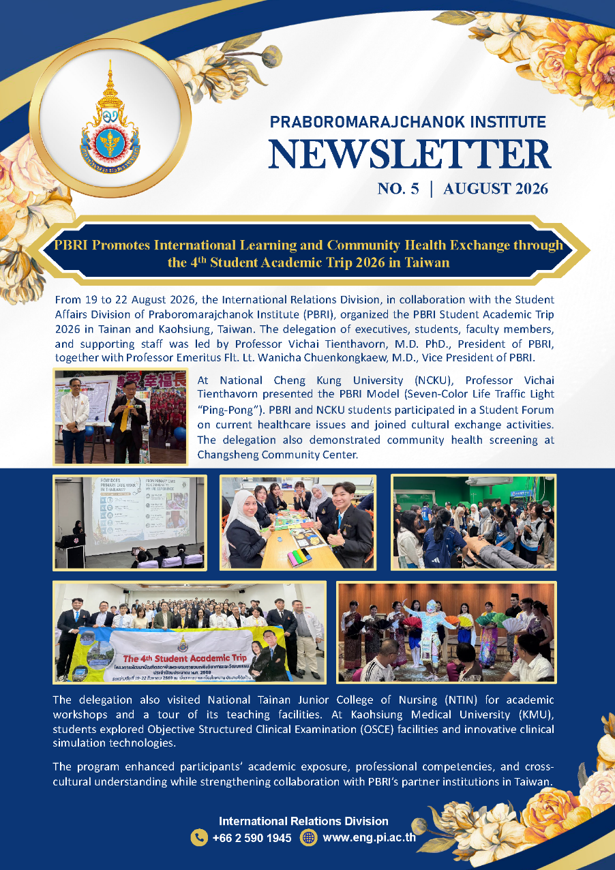
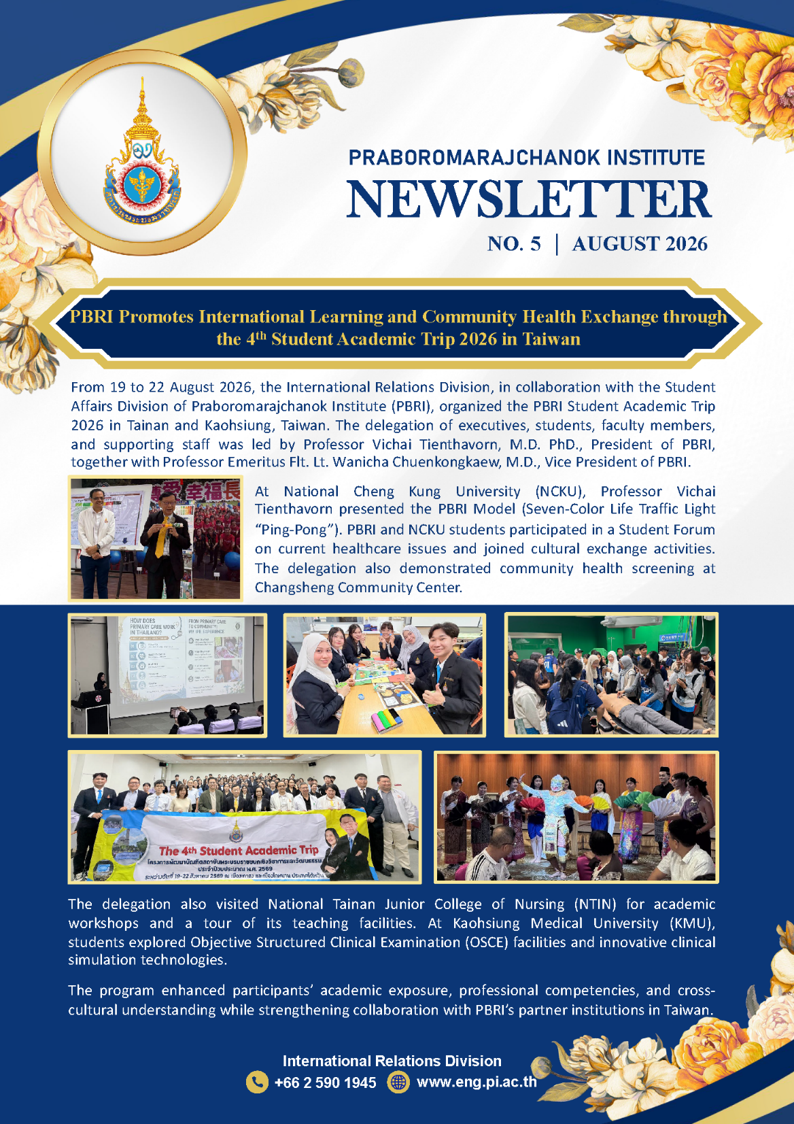
PBRI Promotes International Learning and Community Health Exchange through the 4th Student Academic Trip 2026 in Taiwan.
From 19 to 22 August 2026, the International Relations Division in collaboration with the student, Affairs Divis ion of Praboromarajchanok Institute (PBRI) , organized the PBRI student acdemic trip 2026 in Tainan and Kaohsiung, Taiwan . The delegation of executives, students, faculty members, and supporting staff was led by professor Vichai Tienthawon, M.D. PhD., President of PBRI, together with Professor Emeritus Flt.Lt. Wanicha Chuenkongkaew, M.D., Vice President of PBRI, At National Cheng Kung University (NCKU), Professor Vichai Tienthawon presented the PBRI Medel (Seven-Color Life traffic Light Ping -Pong , PBRI and BCKU students participated in a student Forum on Current Healthcare issues and joined cultural exchange activities. The delegation also demonstrated community health screening at Changsheng Community Centre
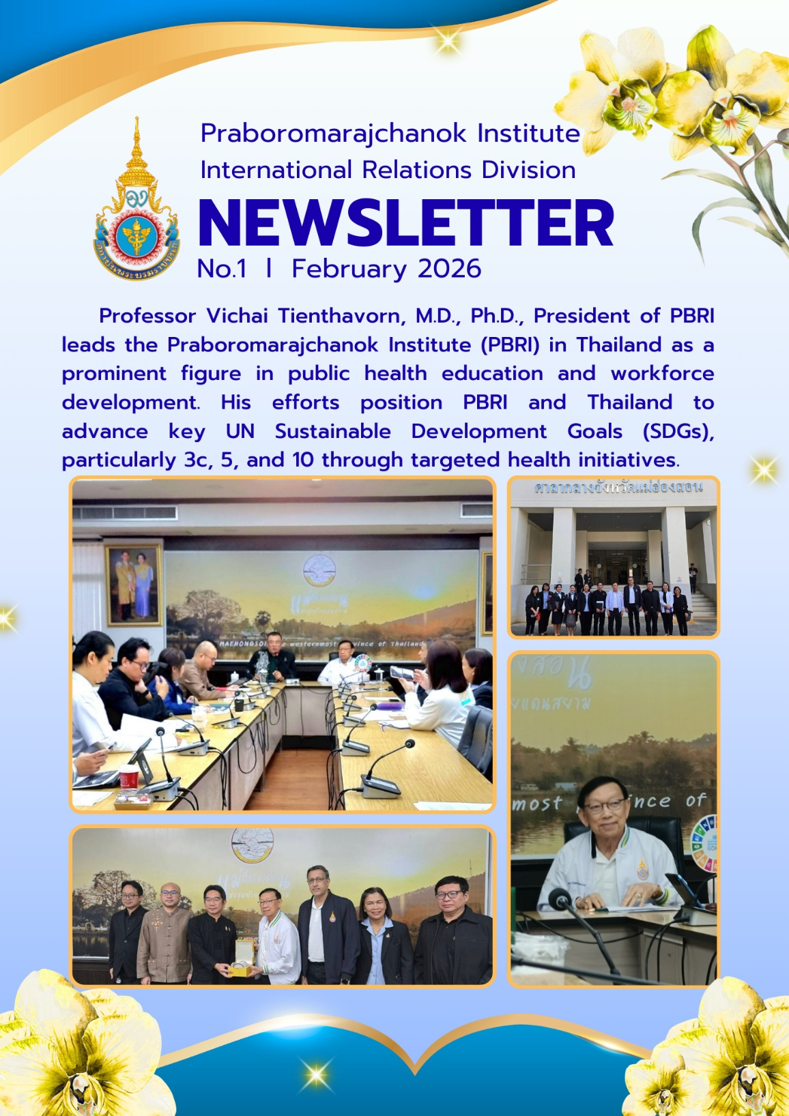
Professor Vichai Tienthavorn, M.D., Ph.D., President of PBRI leads the Praboromarajchanok Institute (PBRI) in Thailand as a prominent figure in public health education and workforce development. His efforts position PBRI and Thailand to advance key UN Sustainable Development Goals (SDGs), particularly 3c, 5, and 10 through targeted health initiatives.
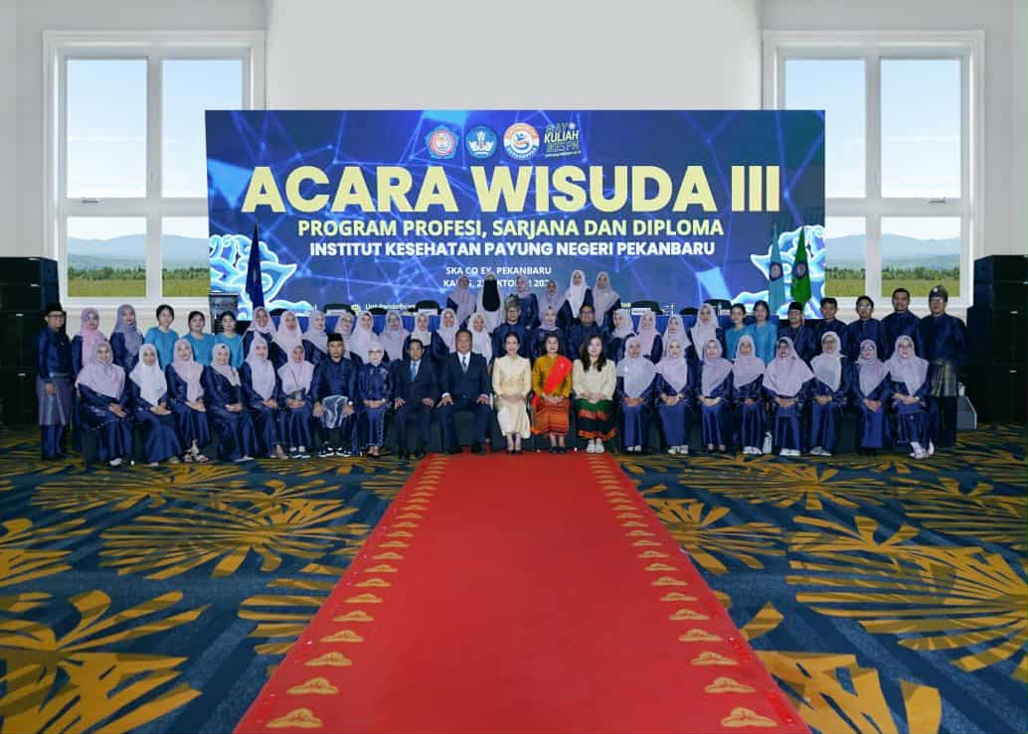
International Health Conference ACARA WISUDA Program Profesi, Sarjana Dan Diploma Institut Kesehatan Payung Negeri Pekanbaru , Indonesia
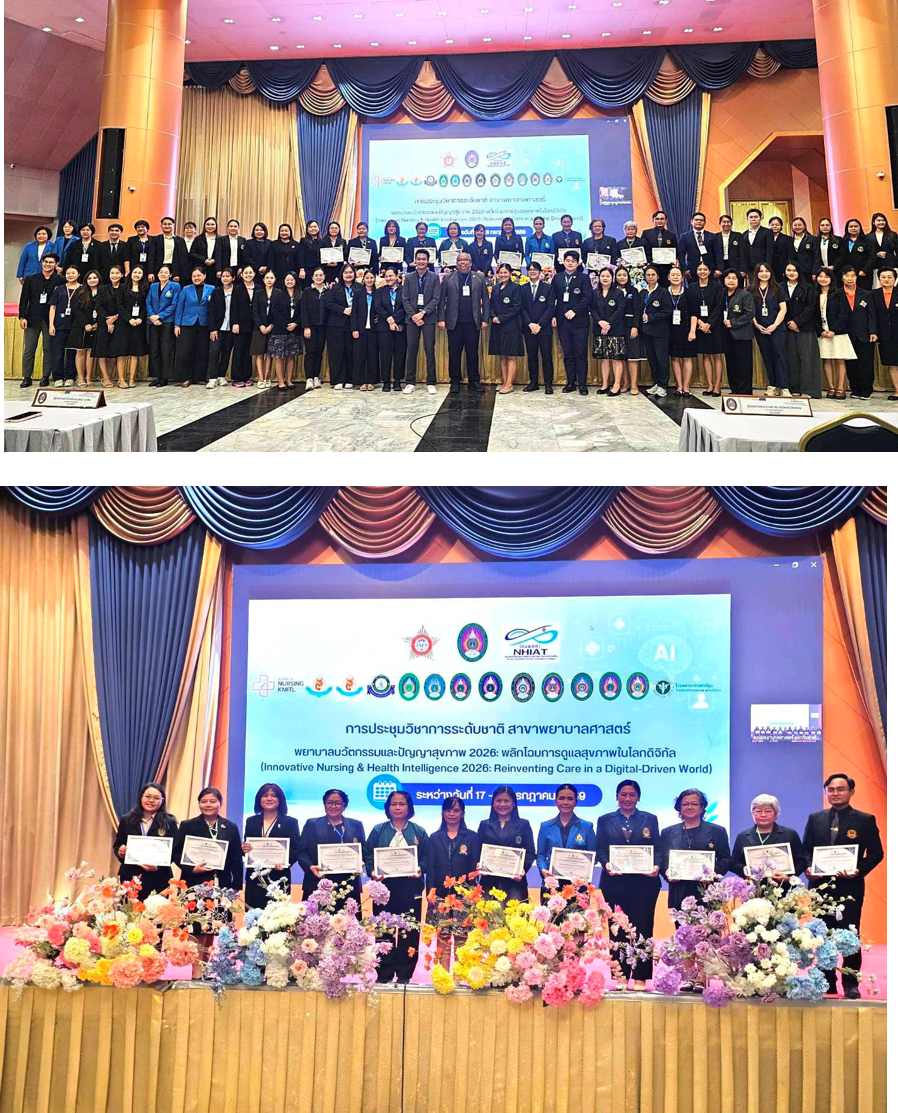
Innovative Nursing & Health Intelligence 2026 Reinvention Care in a Digital- Diven World
Additional evidence link:
17.2.2 Cross sectoral dialogue about SDGs Initiate and participate in cross-sectoral dialogue about the SDGs, e.g. conferences involving government or NGOs
PRABOROMARAJCHANOK INSTITUTE actively initiates and participates in cross-sectoral dialogue about the Sustainable Development Goals (SDGs), including high-level conferences and collaborative events involving government agencies and Non-Governmental Organizations (NGOs). Examples of conferences the university has participated in include:
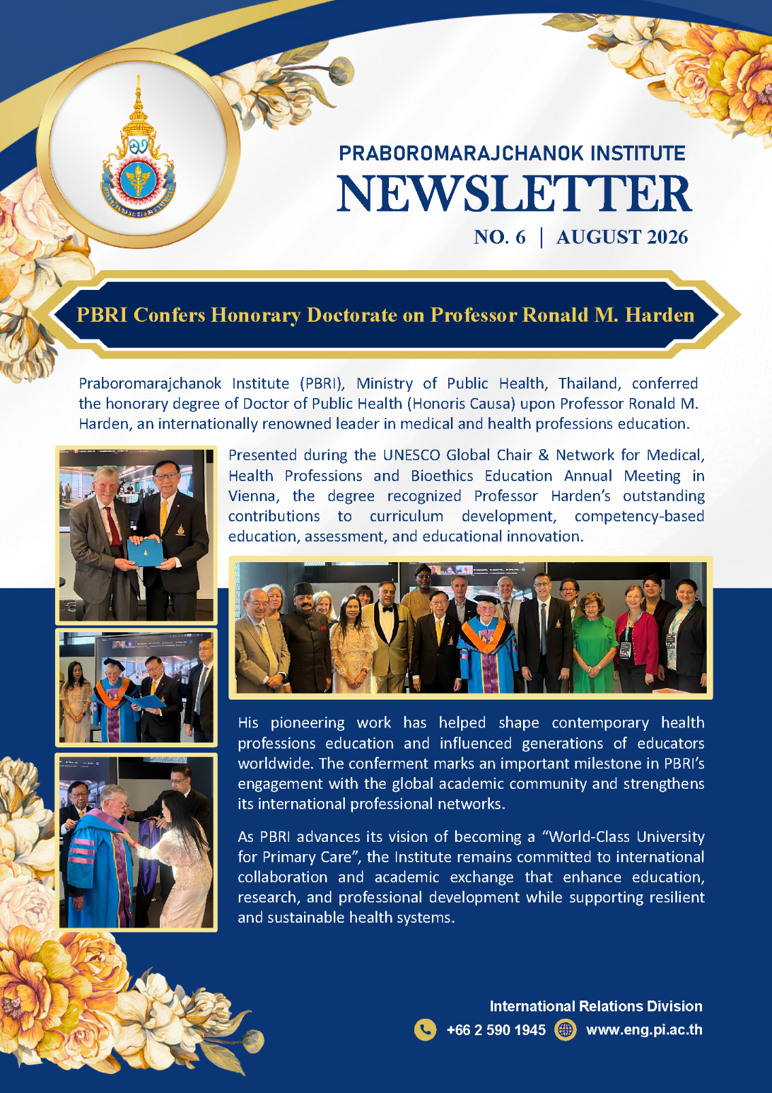
PBRI Confers Honorary Doctorate on Professor Ronald M. Harden
PRABOROMARAJCHANOK INSTITUTE (PBRI), Ministry of Public Heath, Thailand, conferred the honorary degree of Doctor of Public Health (Honoris Causa) upon Professor Renald M. Harden, an internationally renowned leader in medical and health professions education. Presented during the UNESCO Global Chair and Network for Medical, Health Professions and Bioethics Education Annual Meeting in Vienna, the degree recognized professor Harden’s Outstanding contribution to curriculum development, competency -based education, assessment, and educational innovation
PBRI Promotes International Learning and Community Health Exchange through the 4th Student Academic Trip 2026 in Taiwan
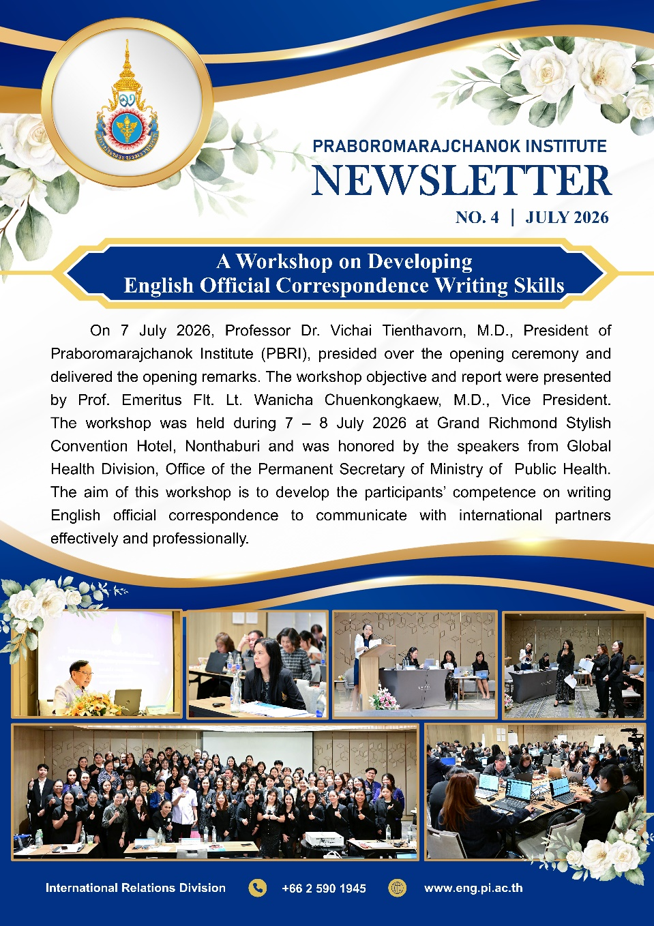
A Workshop on Developing English Official Correspondence Writing Skills
On 7 July 2026, Professor Dr. Vichai Tienthavorn, M.D., President of Praboromarajchanok Institute (PBRI), presided over the opening ceremony and delivered the opening remarks. The workshop objective and report were presented by Prof. Emeritus Flt. Lt. Wanicha Chuenkongkaew, M.D., Vice President. The workshop was held during 7 – 8 July 2026 at Grand Richmond Stylish Convention Hotel, Nonthaburi and was honored by the speakers from Global Health Division, Office of the Permanent Secretary of Ministry of Public Health. The aim of this workshop is to develop the participants’ competence on writing English official correspondence to communicate with international partners effectively and professionally.
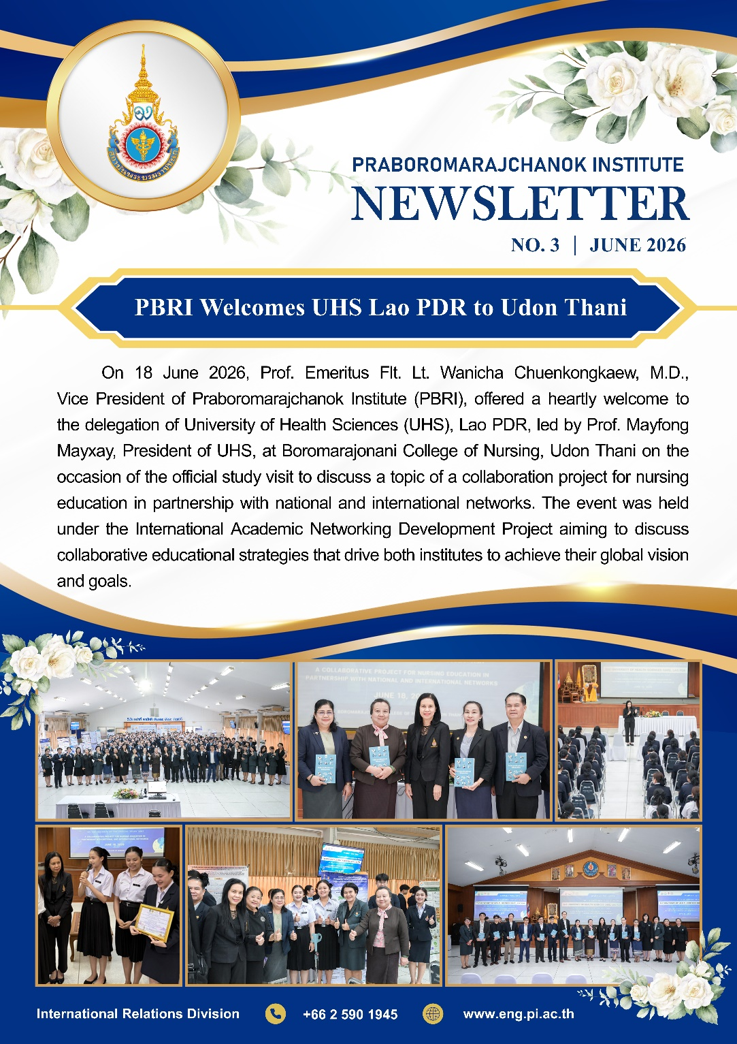
On 18 June 2026, Prof. Emeritus Flt. Lt. Wanicha Chuenkongkaew, M.D., Vice President of Praboromarajchanok Institute (PBRI), offered a heartly welcome to the delegation of University of Health Sciences (UHS), Lao PDR, led by Prof. Mayfong Mayxay, President of UHS, at Boromarajonani College of Nursing, Udon Thani on the occasion of the official study visit to discuss a topic of a collaboration project for nursing education in partnership with national and international networks. The event was held under the International Academic Networking Development Project aiming to discuss collaborative educational strategies that drive both institutes to achieve their global vision and goals.
Additional evidence link:
17.2.3 International Collaboration data gathering for SDGs Participate in international collaborations or measuring data for the develop
PRABOROMARAJCHANOK INSTITUTE
During the period from 2023 to now, the Royal Institution has promoted and developed academic cooperation, especially in conducting research on wellness, through the preparation of Memorandums of Understanding (MoU) and Memorandums of Agreement (MoA) with foreign universities or international organizations as follows:
|
NO |
Details |
Type |
During of process |
status |
|
1 |
Notre Dame of Maryland University , USA. |
MoU |
Jun 2023 – Jun 2026 (3 years) |
Inactive |
|
2 |
University of Dundee United Kingdom |
MoU |
Aug 2024 – Aug 2025 (1 year) |
inactive |
|
3 |
Institute of Technology and Health Bali
Indonesia |
MoU & MoA |
Apr 2023 – Apr 2028 (MoU) Nov 2023 – Nov 2028 (MoA) |
Active |
|
4 |
United University
India |
MoU |
Aug 2023 – Aug 2028 |
Active |
|
5 |
University of East Anglia
United Kingdom |
MoU |
Oct 2023 – Oct 2028 |
Active |
|
6 |
Kunming Children’s Hospital
Chaina |
MoU |
Jun 2024 – Jun 2029 |
Active |
|
7 |
Kunming Medical University
Chaina |
MoU |
Jun 2024 – Jun 2029 |
Active |
|
8 |
Komazawa University
JAPAN |
MoU |
Nov 2024 – Nov 2028 |
Active |
|
9 |
Manipal University College Malaysia |
MoU |
Jun 2025 – Jun 2030 (5 years) |
Active |
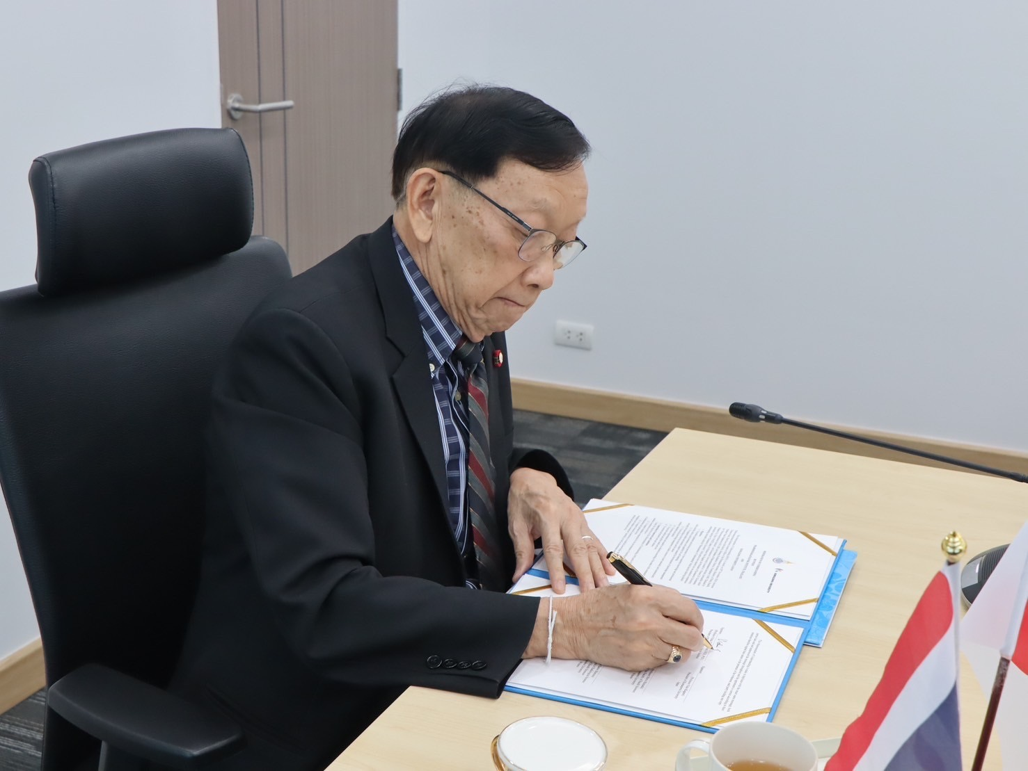
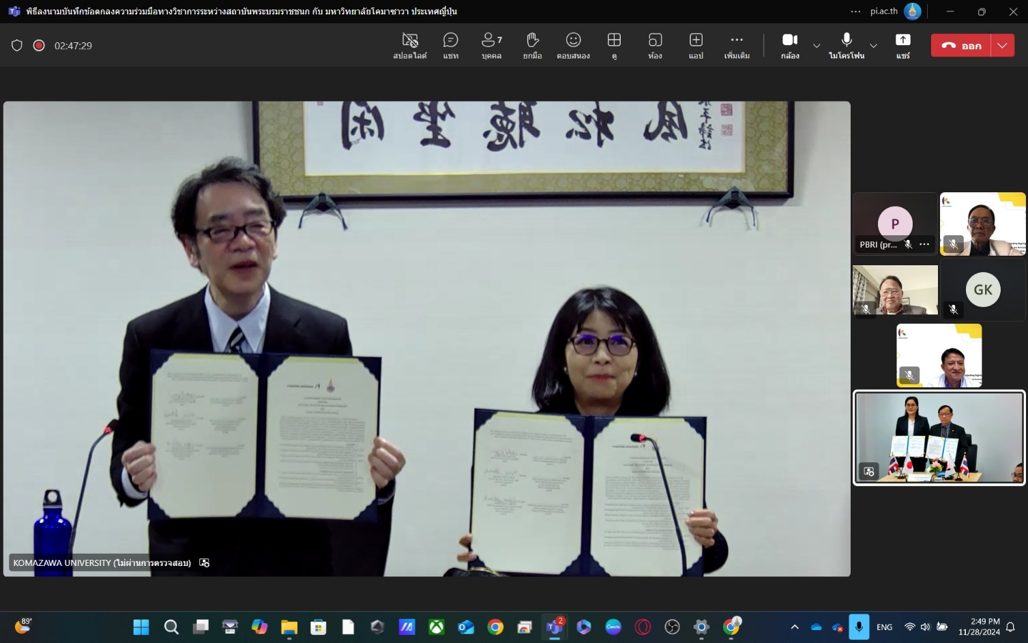
The Signing a Memorandum of Understanding between Praboromarajchanok Institute and Komazawa University
Thursday, 28 November 2024.
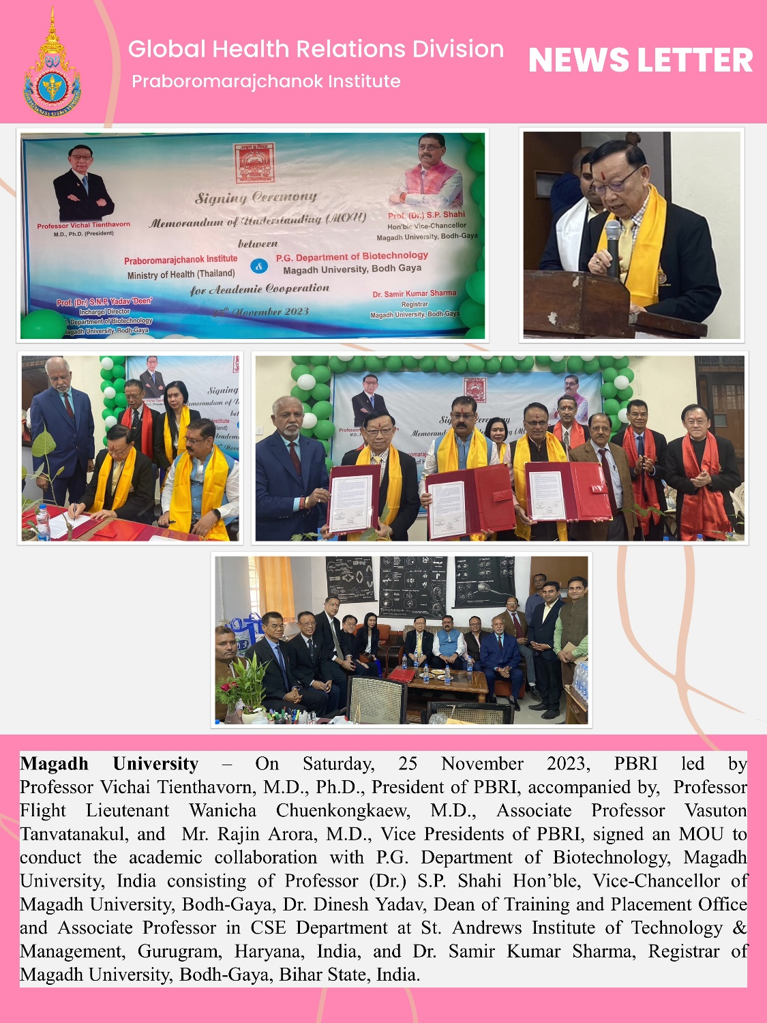
MOU between PBRI and Magadh University
Agadh University – On Saturday, 25 November 2023, PBRI led by Professor Vichai Tienthavorn, M.D., Ph.D., President of PBRI, accompanied by, Professor Flight Lieutenant Wanicha Chuenkongkaew, M.D., Associate Professor Vasuton Tanvatanakul, and Mr. Rajin Arora, M.D., Vice Presidents of PBRI, signed an MOU to conduct the academic collaboration with P.G. Department of Biotechnology, Magadh University, India consisting of Professor (Dr.) S.P. Shahi Hon’ble, Vice-Chancellor of Magadh University, Bodh-Gaya, Dr. Dinesh Yadav, Dean of Training and Placement Office and Associate Professor in CSE Department at St. Andrews Institute of Technology & Management, Gurugram, Haryana, India, and Dr. Samir Kumar Sharma, Registrar of Magadh University, Bodh-Gaya, Bihar State, India.
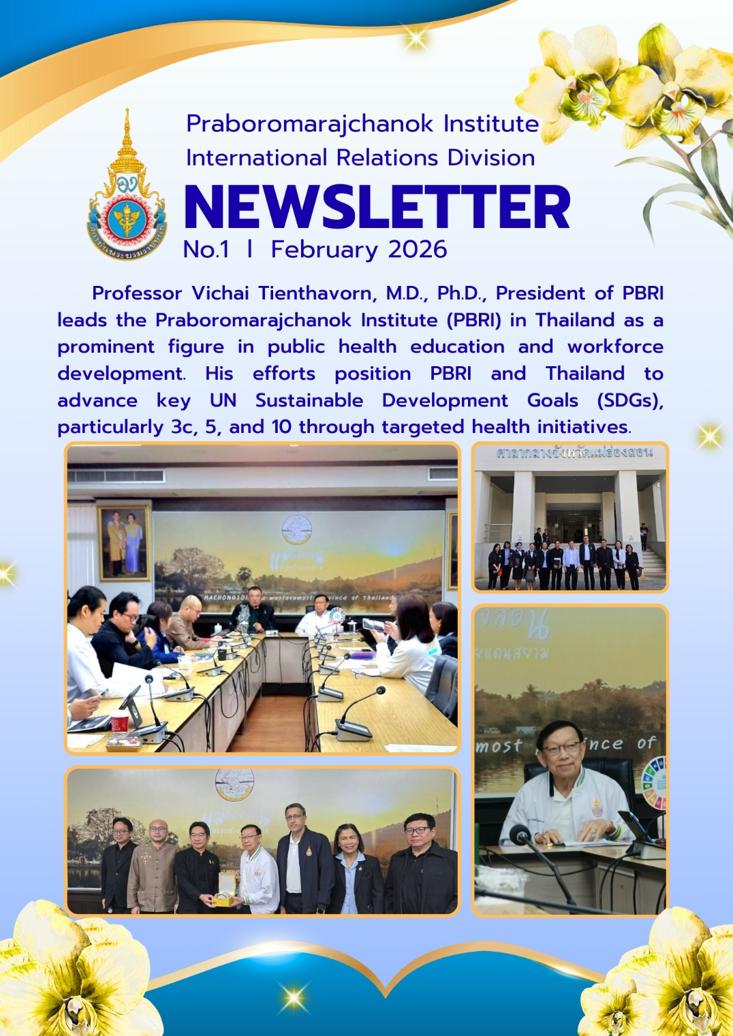
Professor Vichai Tienthavorn, M.D., Ph.D., President of PBRI leads the Praboromarajchanok Institute (PBRI) in Thailand as a prominent figure in public health education and workforce development. His efforts position PBRI and Thailand to advance key UN Sustainable Development Goals (SDGs), particularly 3c, 5, and 10 through targeted health initiatives.
Additional evidence link:
2. https://eng.pi.ac.th/news_view.php?n_id=191
17.2.4 Collaboration for SDG best practice
PRABOROMARAJCHANOK INSTITUTE developing collaborations with government and private sector organizations both domestically and internationally, as well as building networks and relationships with alumni. This aims to enhance the university’s academic and research capabilities through partnerships with all sectors (Quadruple Helix) government, private sector, education, community, and society. Such collaborations support high-quality teaching, research, and academic services. In some cases, industry partners have even become Strategic Partners of the Institute
During the period from 2023 to now, the Royal Institution has promoted and developed academic cooperation, especially in conducting research on wellness, through the preparation of Memorandums of Understanding (MoU) and Memorandums of Agreement (MoA) with foreign universities or international organizations as follows:
|
NO |
Details |
Type |
During of process |
status |
|
1 |
Notre Dame of Maryland University , USA. |
MoU |
Jun 2023 – Jun 2026 (3 years) |
Inactive |
|
2 |
University of Dundee |
MoU |
Aug 2024 – Aug 2025 (1 year) |
inactive |
|
3 |
Institute of Technology and Health Bali Indonesia |
MoU & MoA |
Apr 2023 – Apr 2028 (MoU) Nov 2023 – Nov 2028 (MoA) |
Active |
|
4 |
United University India |
MoU |
Aug 2023 – Aug 2028 |
Active |
|
5 |
University of East Anglia United Kingdom |
MoU |
Oct 2023 – Oct 2028 |
Active |
|
6 |
Kunming Children’s Hospital Chaina |
MoU |
Jun 2024 – Jun 2029 |
Active |
|
7 |
Kunming Medical University Chaina |
MoU |
Jun 2024 – Jun 2029 |
Active |
|
8 |
Komazawa University JAPAN |
MoU |
Nov 2024 – Nov 2028 |
Active |
|
9 |
Manipal University College Malaysia |
MoU |
Jun 2025 – Jun 2030 (5 years) |
Active |
Additional evidence link:
17.2.5 Collaboration with NGOs for SDGs.
PRABOROMARAJCHANOK INSTITUTE developed various management systems within the university to provide tangible results in terms of sustainable development and to create activities in order to achieve awareness of sustainable development goals. The idea is to bring the concept into practice to achieve concrete results as a pilot model for good operation within the institute and to expand good management results to communities and society.
PRABOROMARAJCHANOK INSTITUTE values and is committed to creating SOCIAL ENGAGEMENT for staff and students to “learn socially”, innovate, improve the quality of life of the community, develop the learning process together. As follow
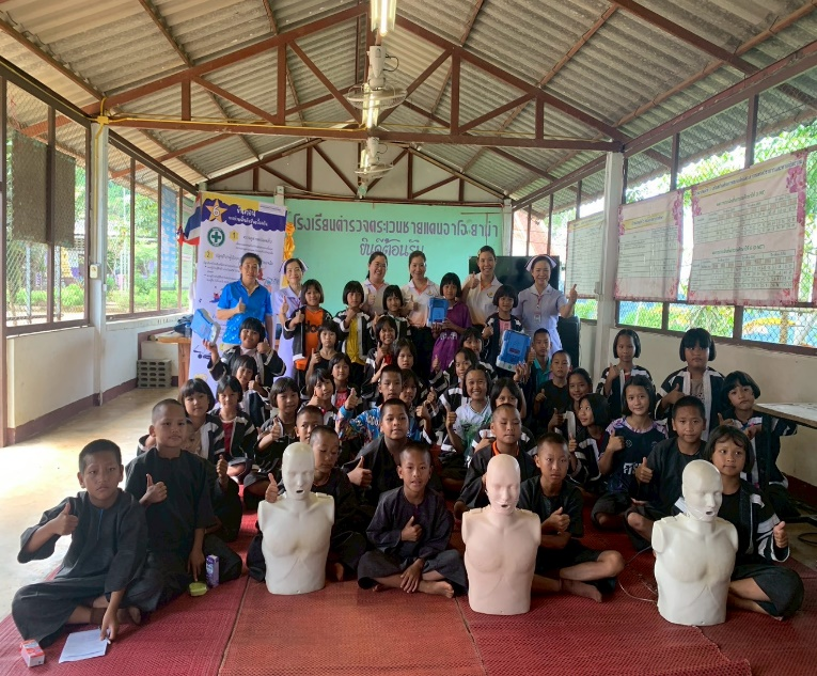
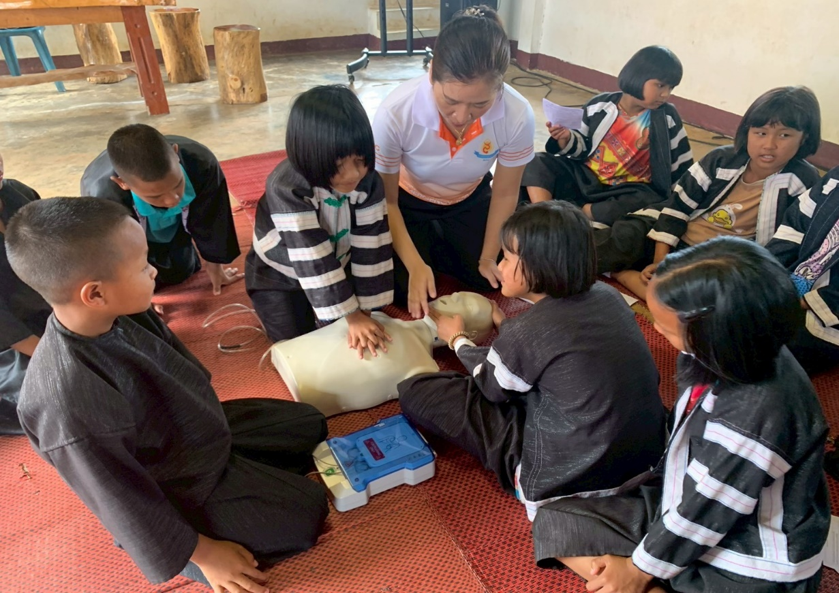
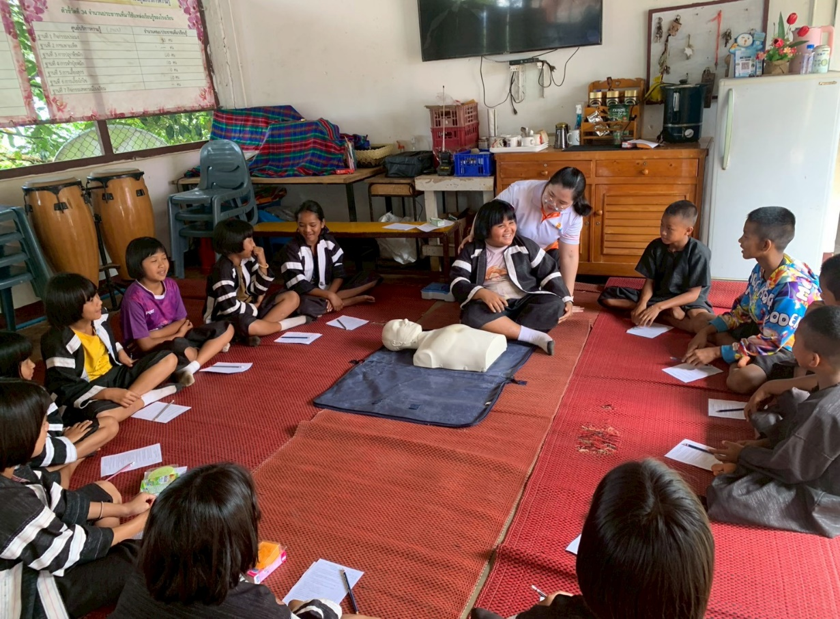
1. Basic Resuscitation Project for Primary School Students 6 Border Patrol Police School Under the Division Superintendent of the 33rd Border Patrol Police in honor of Her Majesty the Queen on 12 September 2025 at 13:00 – 16:00 hrs. Border Patrol Police School 2 Phrao District, Chiang Mai Province
Academic Services and Learning Center, Boromratchonni College of Nursing Chiang Mai in collaboration with the Nurses Association of Thailand Northern Branch Organized the project “Smart Use of Services, Smart Helping Emergency Patients” Basic resuscitation and AED training for high school students 26 border patrol schools in the Northern Region on September 12, 2025, speakers from Boromratchonni College of Nursing Chiang Mai led by A. Picht Sae Sow, Head of Academic Services, A. Suphannika Piyarak Chairman of the Community Learning Center for Emergency Medicine and teachers from the Learning Center to provide knowledge to high school students. Chao Por Luang Upatham 2 School, Phrao District, Chiang Mai Province The purpose of the project is to honor the 125th anniversary of Her Majesty the Queen and to strengthen knowledge and skills in basic resuscitation and the use of an external defibrillator (AED).
Additional evidence link:
17.3 Publication of SDG Reports
17.3.1 Publication of SDG reports
17.4 Education for the SDGs
17.4.1 Education for commitment to meaningful education
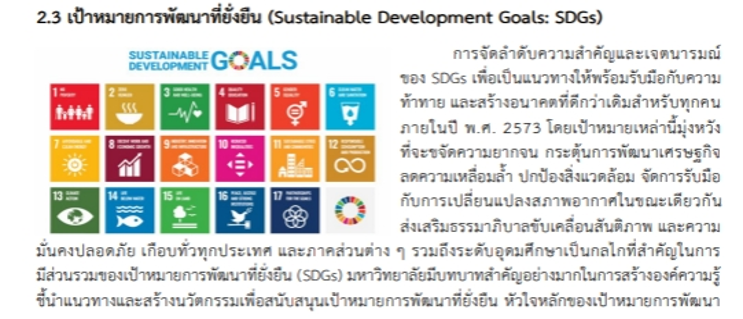
PI recognizes that education for sustainable development should extend beyond classroom knowledge. Students should be equipped with the knowledge, skills, attitudes, and competencies needed to understand complex social, environmental, and economic challenges and to apply what they learn to real-world situations. Therefore, SDGs can be incorporated into curricula, learning activities, community engagement, research, innovation, and institutional practices.
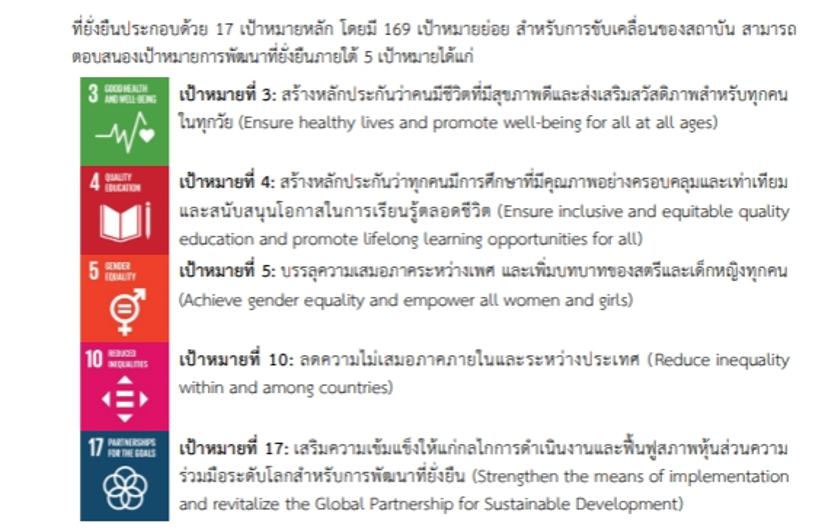
As an institution with a strong focus on health sciences and healthcare professionals, PBRI can connect the SDGs directly to students’ future professional roles. For example, students can learn how health and well-being (SDG 3) are interconnected with quality education (SDG 4), gender equality (SDG 5), clean water and sanitation (SDG 6), climate action (SDG 13), reduced inequalities (SDG 10), and sustainable communities (SDG 11). The Institute is committed to creating learning experiences in which every student has an opportunity to understand the SDGs and translate them into meaningful action. This may include project-based learning, community-based learning, interdisciplinary activities, sustainability projects, service learning, and practical problem-solving in local communities. Ultimately, Education for SDGs at PI aims to develop graduates who are not only competent healthcare professionals but also responsible citizens, sustainability-minded professionals, and change agents capable of contributing to healthier, more equitable, resilient, and sustainable communities.
Additional evidence link:
17.4.2 Education for SDGs specific courses on sustainability Have dedicated courses (full degrees, or electives) that address sustainability and the SDGs.
PBRI applies a principle of Outcome-Based Education (OBE) for teaching in an effective way that enables students to achieve the intended learning outcomes. OBE is a learner-centered learning philosophy that focuses on measuring student’s performance. Therefore, what matters most in OBE is “what is learnt” rather than “what is taught”. In addition, KMUTT also provides General Education course (GEN Ed) parallel with core curriculum contributing to knowledge in scientific research methodology and design process for creating innovative projects. Students will be engaged in the learning process through activities and several fieldtrips.
A commitment to meaningful education around the Sustainable Development Goals (SDGs) across the entire university, ensuring that it is relevant and applicable to all students.
Examples of Curricula Addressing the SDGs
| Course Code | Course Title (English) | Primary SDG Linkage | Relevance Description (Based on Course Note) |
|
GE 201 |
We are PBRI |
Overall SDGs (SDG 9, 17) |
Study and practice in self-understanding and understanding others; problem-solving and social development; and principles of service with a compassionate and service-minded approach. |
| 206105101 | Sciences and Mathematics in Daily Life | SDG 1: No Poverty & SDG 10: Reduced Inequalities | Study of the development of science and technology and their impacts on human beings; fundamental mathematical principles; and the application of mathematics in daily life. |
| 206105102 | Communicable and Non-Communicable Diseases | SDG 11: Sustainable Cities | Study of the meanings, definitions, policies, and practices related to communicable and non-communicable diseases; principles of building immunity; classification of diseases, their causes and symptoms; and disease prevention and control of health issues affecting populations at national and global levels. |
| 206105103 | Health System | SDG 17: Partnerships & SDG 9: Innovation |
Study of the meaning and importance of health; factors affecting health; holistic health and health service systems; health indicators and dimensions of public health; development of national health service systems; health service systems and health insurance; primary health care; health service system development plans; national public health policies; and major health-related projects and activities implemented in the country. |
|
0206105104 |
Basic First Aid | SDG 13: Climate Action & SDG 7: Clean Energy |
Study of concepts and principles of first aid and basic principles for assisting patients, including first aid for individuals with wounds; sprains, dislocations, and fractures; poisoning; venomous animal and insect bites and stings; foreign objects entering the eyes, ears, throat, nose, and stomach; fainting, unconsciousness, shock, seizures, and drowning; fever; and injuries resulting from accidents, within the scope permitted by law and based on basic treatment principles. |
|
GE 101 |
Thai for Academic Purposes | SDG 7: Clean Energy & SDG 13: Climate Action | Study and practice in the principles and skills of listening, speaking, reading, writing, interpretation, summarization, and application of the Thai language for effective communication. |
| GE 102 |
English for Communication |
SDG 11: Sustainable Cities |
Study and practice in listening, speaking, reading, and writing skills, as well as vocabulary and English grammar for communication in everyday life. |
|
0206105105 |
English for Pharmacy Technique | SDG 12: Responsible Consumption & SDG 6, 13, 14 |
Study of English listening, speaking, reading, writing, and summarization, with an emphasis on technical terminology in pharmacy and health sciences. Students also conduct research and present relevant information for application in professional practice. |
| 206105106 |
Microbiology and Parasitology |
SDG 7: Clean Energy & SDG 13: Climate Action |
Study and practice of the immune system and mechanisms of the body’s immune responses; morphology, structure, life cycles, growth, reproduction, metabolism, and epidemiology of medically important microorganisms and parasites; principles of disinfection and sterilization; and laboratory diagnosis in medical microbiology and parasitology. |
|
0206105107 |
Mathematics for Pharmacy Technique |
SDG 12: Responsible Consumption & SDG 9 |
Study of pharmaceutical calculations, weighing and measuring techniques, including the weighing and measurement of small quantities; density and specific gravity; potency of pharmaceutical preparations; dilution and concentration; stock solutions; the alligation method; reduction and enlargement of formulas; calculations related to prescriptions; and calculations for extemporaneous preparations for individual patients. |
| 206105108 |
Human, Society and Environment |
SDG 12: Responsible Consumption & SDG 13: Climate Action |
Study of human beings, society, culture, values in life, human rights, social interactions and coexistence, and the environment; life and aesthetics; social responsibility; social problems; and approaches to solving social problems. |
|
0206105109 |
Morals and Professional Ethics |
SDG 7: Clean Energy |
Study and practice of theories and fundamental concepts of morality and ethics; the relationship between ethics and the roles and responsibilities of public health personnel; professional ethics and values of public health personnel; civil service discipline; ethical development; ethical reasoning in addressing ethical dilemmas in various situations; and the application of ethical principles to problem-solving. |
|
0206105110 |
Health Education and Behavior Science |
SDG 12: Responsible Consumption & SDG 13: Climate Action |
Study and practice of fundamental concepts of health education and behavioral science; determinants of health; theoretical concepts in health education; health education strategies; principles of communication and public relations; health education and public relations media; health education planning processes; implementation of health education programs; evaluation of health education activities; the role of health educators in the process of health behavior change; and the application of health communication principles in public health practice. |
|
0206105111 |
Computer and Information Technology |
SDG 12: Responsible Consumption & SDG 9 |
Study and practice of the meaning and importance of computers and information technology; computer components; multimedia; data communication; network systems; electronic information retrieval; operating systems; application software relevant to professional practice; data management software; Internet-based applications; electronic commerce; Internet threats and security; and laws and ethics related to the use of information and communication technology. |
|
0206105112 |
Anatomy and Physiology | SDG 12: Responsible Consumption & SDG 13 |
Study and practice of the structure and functions of cells, tissues, and organs in the various systems of the human body, including the interrelationships and coordination of functions among different body systems. |
|
0206105113 |
Pharmacology 1 |
SDG 7, 12, 13 | Study of fundamental knowledge of drugs; pharmacokinetics; pharmacodynamics; drug interactions; adverse drug reactions; and the pharmacological principles of drugs acting on the autonomic nervous system, respiratory system, gastrointestinal system, endocrine system and sex hormones, as well as drugs affecting the immune system and vaccines. |
|
0206105114 |
Pharmacology 2 |
SDG 13, 14, 15 |
Study of the pharmacological principles of drugs acting on the cardiovascular system; antimicrobial agents; anticancer drugs; analgesics, antipyretics, and anti-inflammatory drugs; and drugs acting on the central nervous system. |
|
0206105115 |
Epidemiology and Biostatistics |
SDG 12: Responsible Consumption |
Study and practice of fundamental concepts of epidemiology; the natural history of disease; concepts and principles of biostatistics; statistical methods; descriptive statistics; probability and probability distributions; sampling distributions and population parameter estimation; inferential statistics and statistical hypothesis testing; health indicators; vital statistics and their applications in public health; epidemiological principles for disease prevention and control; and the application of epidemiological methods to public health problem-solving. |
|
0206105216 |
Basic Pharmaceutical Compounding |
SDG 12: Responsible Consumption |
Study and practice of principles of pharmaceutical preparation and manufacturing in accordance with established standards and good manufacturing practices; basic pharmaceutical preparation techniques; formulation ingredients; preparation methods; packaging; drug labeling; preliminary physical quality control; and appropriate storage conditions for various dosage forms, including liquid, semisolid, and solid preparations, as well as individualized and specialized pharmaceutical preparations. |
|
0206105217 |
Pharmacy Service |
Overall SDGs (BCG & ESG) |
Study and practice of hospital pharmacy service systems; pharmaceutical services according to healthcare benefit schemes; prescription reading and preliminary prescription screening; calculation of medication quantities according to prescribed directions; use of software relevant to pharmacy services; drug labeling and label selection; classification of medicines and non-drug medical supplies; medication dispensing, verification of dispensed items, and checking of medication orders; provision of basic counseling on medication use and specialized drug administration techniques; rational drug use; recording and compilation of medication-use data; and quality assurance in healthcare facilities. |
|
0206105218 |
Pharmaceutical Inventory Management |
SDG 13: Climate Action |
Study and practice of regulations and requirements related to medical supplies management processes, including planning, selection, procurement, receiving and inspection, management of medical supplies warehouses and satellite medication storage areas, storage, inventory control and stock verification, distribution and delivery of medical supplies, preparation of receipt and issue records, statistical reports and other reports, use of software related to medical supplies management, risk management in medical supplies management, and the roles and responsibilities of pharmacy technicians in medical supplies management. |
|
0206105218 |
Pharmaceutical Inventory Management |
SDG 13: Climate Action |
Study and practice of the meaning, importance, and scope of consumer protection in public health; principles of public health consumer protection operations; organizations involved in consumer protection in public health; standards for health products and services; inspection and surveillance of establishments, health products, and advertising; laws and regulations concerning health products and services; health information technology for consumer protection in public health; and the receipt and management of complaints concerning health products and services. |
|
0206105119 |
Consumer Protection in Public Health | SDG 13: Climate Action |
Study and practice of the meaning, importance, and scope of pharmaceutical information services; types and sources of pharmaceutical information; information searching and collection; development of educational materials on medicines and health products; information management; analysis and utilization of information; preparation of references and citations; drug coding and health information systems; database maintenance; and provision of drug and health product information services. |
|
0206105120 |
Pharmaceutical Information |
SDG 13: Climate Action |
Study and practice of the meaning, importance, and scope of pharmaceutical information services; types and sources of pharmaceutical information; information retrieval and collection; development of educational materials on medicines and health products; information management; analysis and utilization of information; preparation of references and citations; drug coding and health information systems; database maintenance; and provision of drug and health product information services. |
|
0206105221 |
Pharmacy Technique in Community |
SDG 13: Climate Action |
Study and practice of community assessment principles; identification, prioritization, and analysis of community health problems; and project development to address problems and enhance the public’s capacity to use herbal medicines and health products. The course also covers the development of community networks for health care and pharmaceutical care for continuity of patient care. |
|
0206105222
|
Integrative Pharmacy Technique
|
Practice in integrating pharmaceutical technician knowledge and skills to prepare students for professional practice. |
|
|
0206105223
|
Introduction to Clinical Pharmacy
|
Study and practice of the scope of basic clinical pharmacy services; obtaining patients’ medication histories; collecting data on adverse drug reactions associated with medicines and health products; identifying and collecting preliminary data on drug-related problems during medication order entry; patient medication safety; medication errors and corrective measures; medication reconciliation; telepharmacy services; and the collection of data and statistics, as well as the preparation of reports related to pharmaceutical care services. |
|
|
0206105024
|
Health Care Logistics
|
Study of the meaning, importance, and major activities of logistics systems; logistics systems in healthcare; supply chain management; and operational planning to control the efficient flow of medical supplies, including procurement, monitoring and inspection, cost management, distribution, and transportation. The course also covers the application of logistics systems in medical supplies inventory management, inventory management and control, and the use of logistics information technology in medical supplies inventory management. |
|
|
0206105025
|
Herbals and Health Products
|
Study of the meaning and types of herbal medicines and health products; information retrieval and evaluation of the reliability of information on herbal medicines and health products; medicinal herbs used in primary health care; commonly encountered health products in communities; problematic health products; and the regulation, surveillance, quality inspection, and safety of herbal medicines and health products. |
|
|
0206105026
|
Seminar in Pharmacy Technique
|
Study of the principles and methods of conducting seminars on topics related to pharmaceutical technology; literature searching and selection of research studies; presentation media and techniques; preparation of supporting documents for presentations; application of information technology in research and the compilation of research reports; synthesis of knowledge and data analysis; and presentation of research findings, answering questions, participating in discussions, and expressing opinions with sound reasoning. |
|
|
0206105027
|
Disinfection and Sterilization
|
Study of disinfection and sterilization techniques; preparation of facilities and equipment; manufacturing processes and quality control of sterile pharmaceutical preparations; various types of sterile preparations; and disinfectants used in hospitals. |
|
|
0206105028
|
Introduction to Drug Therapy
|
Study of over-the-counter medicines; disease symptoms; pharmacological treatment; adverse drug reactions; and self-care practices for common diseases and chronic conditions. |
|
|
0206105029
|
Public Health Administration
|
Study of management philosophies and principles relevant to public health administration; public health management planning; organizational structures of public health agencies and local government organizations; personnel management; directing and supervision; document and records management; financial and budget management; supplies management; analysis of the administrative functions of primary-level public health facilities; economic principles, demand, supply, and break-even analysis in public health administration; laws and regulations relevant to public health practice; and the application of information systems in public health administration. |
|
|
0206105230
|
Professional Practicum
|
Practical training in professional skills in pharmacy services; medical supplies management; pharmaceutical academic work and report preparation; hospital quality assurance; consumer protection in public health; and herbal medicine services in community hospitals. The training also includes healthcare services at community health centers or subdistrict health-promoting hospitals under the responsibility of the participating hospitals. Students further develop professional skills in pharmacy services; medical supplies management; the production of conventional and sterile medicines and the preparation of individualized medications; basic clinical pharmacy services; specialized clinics or centers of excellence within healthcare facilities; pharmaceutical academic work and report preparation; and hospital quality assurance in general or regional hospitals. |
|
|
0206105231
|
Professional Practicum 1
|
Practical training in professional skills in pharmacy services; medical supplies management; pharmaceutical academic work and report preparation; hospital quality assurance; consumer protection in public health; and herbal medicine services in community hospitals. The training also includes healthcare services at community health centers or subdistrict health-promoting hospitals under the responsibility of the participating hospitals. |
|
|
0206105232
|
Professional Practicum 2
|
Practical training in professional skills in pharmacy services; medical supplies management; the production of conventional and sterile medicines; preparation of individualized medications; basic clinical pharmacy services; services provided by specialized clinics or centers of excellence within healthcare facilities; pharmaceutical academic work and report preparation; and quality assurance in general or regional hospitals. |
|
|
0206105233
|
Pharmacy Technique Project
|
Practical application and integration of pharmaceutical technology knowledge and skills to create and develop work through surveys, innovation and invention, or systematic work processes. The course covers project topic selection, information research, project proposal writing, project implementation, data collection, data analysis and interpretation, report preparation, and project presentation. |
|
|
0206105234
|
Pharmacy Technique Project 1
|
Practical application and integration of pharmaceutical technology knowledge and skills to create and develop work through surveys, innovation and invention, or systematic work processes. The course covers project topic selection, information research, and project proposal writing. |
|
|
0206105235
|
Pharmacy Technique Project 2
|
Practical application and integration of pharmaceutical technology knowledge and skills in project implementation, data collection, data analysis and interpretation, preparation of conclusions and reports, and presentation of project outcomes. |
|
|
0206105036
|
Thai Wisdom and Alternative Medicine
|
Study of Thai health culture and traditional wisdom, medicinal herbs, traditional Thai medicine, and alternative medicine. The course also covers capacity development for self-reliance in health care through Thai wisdom and alternative medicine based on the Sufficiency Economy Philosophy. |
|
|
0206105037
|
Sufficient Economy Philosophy
|
Study of the background, meaning, and principles of the Sufficiency Economy Philosophy; guidelines for daily living; policy formulation and economic planning based on the Sufficiency Economy Philosophy; and the application of its principles to daily life in response to changing social conditions. |
|
|
0206105038
|
Independent Study
|
Study and practice in topics of learners’ interest related to their professional fields. The course covers self-directed learning planning, critical thinking, problem-solving, and independent learning using the scientific method, as well as the application of information technology for research under the guidance of an academic advisor. |
|
|
0206105039 |
Field Study |
Study and practical activities involving visits to external and internal organizational facilities to enhance professional experience and develop practical knowledge and skills. |
|
|
0206105040 |
Project Evaluation |
Study and practice in the meaning and principles of project evaluation; evaluation theories and models; analysis of evaluation issues; project evaluation processes; data collection and analysis; preparation of project evaluation reports; and ethical principles for project evaluators. |
|
|
0206105041 |
Health Business |
Study of fundamental knowledge related to health businesses; marketing management for health businesses; organizational structures and management; laws and ethics related to health businesses; health advertising and public relations; and communication in health business operations. |
|
|
0206105042
|
Personality Development |
Study of the meaning and importance of personality development; personality theories; personality improvement and development; personal health and grooming to enhance personality; speaking skills for effective self-presentation; gestures, manners, and appropriate conduct in accordance with Thai culture and traditions; effective communication; and the development of role models for good health practices. |
|
|
0206105043
|
Art of Speech and Presentation
|
Study and practice of principles and techniques of public speaking for various purposes and occasions; speaking skills for achieving success; development of content, language, personality, and speaking techniques; presentation of projects and work achievements; use of presentation media; and practical speaking exercises for different purposes and occasions. |
|
|
0206105044 |
Yoga for Health |
Study and practice of principles and techniques of public speaking for various purposes and occasions; speaking skills for achieving success; development of content, language, personality, and speaking techniques; presentation of projects and work achievements; use of presentation media; and practical speaking exercises for different purposes and occasions. |
|
|
0206105045
|
Rhythmic Activities |
Study and practice of the meaning and history of rhythmic activities; ballroom dancing and its benefits; fundamental knowledge and basic techniques of ballroom dancing; ballroom dancing for recreation; and ballroom dancing for competition. |
|
|
0206105046
|
Photography Technique |
Study and practice of camera operating principles; principles and techniques of photography; various types of photography; and practical photography using film and digital cameras. |
|
|
206105047 |
Health and Aesthetics |
Study and practice of health care, disease prevention, health promotion, and common health problems across different stages of life; anti-aging science and health rejuvenation; food and health products for everyday beauty care; advances in health and beauty science; current trends in dietary supplements for health and beauty; and adverse effects associated with the use of health and beauty supplements. |
|
|
0206105048 |
Food and Nutrition |
Study and practice of nutritional principles; nutrients; nutritional problems; food exchange systems; standard balanced diets; menu planning; nutritional value calculations; food preparation for individuals of different age groups and those with special nutritional needs; and therapeutic diets for specific diseases. |
|
|
GE 302
|
Digital Literacy
|
Study and practice of digital concepts, understanding, and applications; digital intelligence; access to digital media; communication in the digital era; digital security; appropriate practices in digital society; digital laws; rights, responsibilities, and ethics in the use of digital technology; and future trends in digital technology. |
|
|
0206105049 |
Walking and Jogging for Health |
Study and practice of the history and benefits of walking and running for health; basic walking and running skills; physical fitness enhancement through walking and running; equipment care and maintenance; and safety practices for walking and running for health. |
|
|
0206105050 |
Recreation |
Study and practice of fundamental knowledge of recreation; the importance of recreation in enhancing quality of life; principles for selecting recreational activities in daily life; organization of recreational activities; and selection of appropriate recreational activities to promote physical, mental, emotional, and social development. |
|
|
0206105051 |
Basic Principles of Research |
Study and practice of basic research methodology; the meaning, importance, and types of research; research problems; formulation of research objectives and scope; hypothesis development; retrieval and analysis of research information; population and sampling; research instruments; data collection; research statistics; and preparation of research proposals and reports. |
|
|
GE 101 |
Thai for Academic Purposes |
Principles and skills in listening, speaking, reading writing, interpreting, summarizing and applying Thai language for communication according to contexts and situations in both daily life and academic purposes |
|
|
GE 102 |
English for Communication |
Principles and skills in listening, speaking, reading and writing, use of English vocabulary and grammar for daily communication |
|
|
GE 201 |
We are PBRI |
Understanding of self and others, having problem solving skills and developing societies, providing good services with a humanistic care principle according to the graduate identity of Praboromarajchanok Institute, having volunteer mind based on the Sufficiency Economy Philosophy |
|
|
GE 302 |
Digital Literacy |
Digital literacy concept, digital quotient, digital media access, digital communication, digital security, digital society practices, digital law rights and responsibilities, ethics of using digital technology, trend of future digital technology |
|
|
GE 305 |
Sciences and Mathematics in Daily Life |
Numeric analysis, management of personal finance, calculation of public utility, selection of various investment, calculation of interest and insurance premium, statistic data collection for survey and decision, application of sciences, mathematics and statistic in a daily life |
|
|
GE 103 |
English for Academic Purposes |
Principles and skills in using English for presentation, report writing, discussion by applying vocabulary, academic idioms and academic ethics |
|
|
GE 301 |
Entrepreneur in Digital Era |
“Concepts, significance of being an entrepreneur, analysis and setting up a business plan, planning a public relation, management, summary and interpretation of business data and related factors, applying digital era technology and scientific approaches for the entrepreneurship concept based on principles of morality and entrepreneurs’ ethics “ |
|
|
02 06301 101 |
Applied Science in Public Health |
“Numeric analysis, management of personal finance, calculation of public utility, selection of various investment, calculation of interest and insurance premium, statistic data collection for survey and decision, application of science, mathematics and statistic in a daily life” |
|
|
3 06301 105 |
Anatomy and Physiology for Public Health
|
“Anatomy, histology and physiology of fundamental human body, structure and functions of cells, tissues and organs of human body system, as well as body system relationships study of how these systems work together in order to maintain normal physiological state of whole organism and practices in laboratory “ |
|
|
02 06301 102 |
“Microbiology and Parasitology for Public Health” |
“Fundamental knowledge in microbiology, general characteristics, classifications, cultivation of microorganisms such as bacteria virus yeast and mold and helminthes. Microbiology and parasitology, identification of group and species of microbiology and parasitology, microorganisms and defense mechanisms, microorganisms and parasite control, testing for microorganism and parasites, microscopes, practices in basic testing for microorganisms, parasites, using and maintaining of microscopes. Media preparation and sterilization, essential microbiological techniques, enumeration of microorganism, study of fungi, bacteria staining, destruction and inhibition of microorganism” |
|
|
02 06301 106 |
Principles of Public Health |
“Definition, importance and history of public health and dental public health, health systems and health service systems in national and international level, desirable health system framework (six building blocks), primary, secondary and tertiary health care, quality of life and public health, primary health care unit, national health, development plan, health insurance, quality of life and public health, public policy, health determinants and social determinants of health, policy and guidelines for international public health development collaboration” |
|
|
02 06301 207
|
Pathophysiology for Public Health |
The changing of cell, tissue and organ response to abnormal stimulation from the environment such as cell injury, inflammation, neoplasia for basic understanding the systemic diseases especially and clinical manifestation |
|
|
02 06301 208 |
Public Health Nutrition
|
“Basic knowledge for food and nutrition, nutritional assessment at the individual, family and community levels, community nutritional management and dietary for health risk persons, patients with health and oral health problems, practices in nutritional assessment at the individual family and community levels, community nutritional management and nutritional health education for health risk persons, patients with health and oral health problems, planning development for solving community nutrition problem” |
|
|
02 06301 211 |
Dental Anatomy |
Study of dental histology and dental anatomy of the teeth and oral structures; tooth nomenclature; tooth morphology and structure; functions of permanent and primary teeth; tooth eruption; dental occlusion; and identification of the components of tooth anatomy. Practical training includes drawing teeth, carving teeth from wax according to ideal dental anatomy, and identifying and classifying permanent and primary teeth based on their morphological characteristics and the distinguishing features of individual teeth. |
|
|
02 06301 212 |
Health Promotion Health Education and Health Behavior |
Study of theories and concepts of health promotion; holistic health promotion across all age groups; principles of health education and behavioral science; theories and models related to health behaviors, such as health promotion planning models, the Transtheoretical Model of Behavior Change, and oral health literacy; health education methods, media, and technologies; planning and evaluation of health education programs; health promotion and health behavior modification; and techniques and methods for selecting media for public relations in public health. Practical training includes analyzing factors affecting health behaviors and implementing health education and dental health education programs to improve health behaviors at individual, family, and community levels. |
|
|
02 06301 220 |
Preventive Dentistry |
Study of the principles and concepts of preventive dentistry; characteristics of early childhood caries; assessment of oral disease risk and planning of appropriate preventive dental services for different age groups; mechanical and chemical plaque control; fluoride application; pit and fissure sealants; scaling, polishing, and full-mouth prophylaxis for disease prevention; and modern techniques and technologies in preventive dentistry. Practical training includes assessing oral disease risk and planning age-appropriate preventive dental services; toothbrushing; use of adjunctive oral hygiene devices; fluoride application; pit and fissure sealants; scaling, polishing, and full-mouth prophylaxis for preventive care. |
|
|
02 06301 223 |
Oral Pathology and Oral Diagnosis |
Study of the theories and mechanisms of dental caries and periodontal diseases; oral pathology of dental caries, periodontal diseases, pulpal and periapical diseases; odontogenic infections; oral cysts and tumors; oral lesions; malocclusion and temporomandibular joint disorders; developmental abnormalities of oral structures; oral health problems in patients with systemic diseases; patient history taking; clinical examination; oral health indices; diagnosis; radiographic imaging and interpretation; treatment planning for oral diseases; and referral of patients whose conditions exceed the scope of treatment, including appropriate patient counseling and referral procedures. |
|
|
02 06301 203 |
Biostatistics and Statistics in Public Health
|
“Biostatistics concepts and principles, statistical methods, population, sampling and sample size, descriptive statistics, sampling distribution, probability distribution, inferential statistics, chi-square test, correlation and simple regression testing, vital statistics and use of vital statistics in public health, practice of statistic methodological procedures” |
|
|
02 06301 210 |
Public health Psychology |
“Concepts and theories in Psychology relating to emotion, personality, motivation, learning, attitude, self-understanding, understanding others, relationship establishment, living with others, problem solving skills for the daily living and adjustment in the dynamic social circumstances “ |
|
|
02 06301 209 |
“ Demography “ |
” Principles and concepts of demography, phenomenon, size, distribution, structure, characteristic of population, composition of population revolution, birth rate, reproductive rate, mortality rate, migration rate, relationship between population and social factors, economics and others, impact of population change on health and environment” |
|
|
02 06301 221 |
First Aid |
Principles, concepts and fundamental of first aid in comprehensive situations under the laws and holistic approaches, practices in first aid for patients and situations |
|
|
02 06301 224 |
Operative Dentistry |
“Dental anatomy related to filling, cavity design for tooth filling, fundamental dental materials, cariostatic filling materials, the use of filling materials for prevention, minimal intervention treatment, treatment of non-fillable decayed teeth, temporary filling for referral, usage of instruments and materials for filling, the use of modern dental procedures and techniques, body’s reaction to filling materials, pediatric behavioral management in dentistry, maintenance of dental equipment, dental unit, water and air system of dental unit, types of handpieces and burs, infection control in dental services, practice” |
|
|
02 06301 225 |
Dental Surgery |
“Basic knowledge of surgery, tooth extraction, wound healing, instruments used in basic oral surgery, local anesthetic usage in dentistry, mechanism of local anesthetic, methods of local anesthetic injection, other instruments of anesthesia, physiology of nervous system and anesthesia, contra-indication in local anesthetic injection, complication of local anesthetic injection and tooth extraction, systemic diseases related to dental practice, dental emergency management, primary emergency therapy to reduce the pain from oral diseases, infection control in the field of oral surgery, drug prescription and dispensing according to the drug list in primary care units “ |
|
|
02 06301 222 |
Basic Medical Care and Basic Drug Utilization in Public Health |
“Concepts of disease, signs and symptoms, physical assessment, diagnosis, basic treatment, and basic drug usage under the law and holistic approaches as well as referral system, ethical patients care, practices in physical assessment, basic treatment under the law and holistic approaches as well as referring of patient home visit referral system” |
|
|
02 06301 217 |
Disease Control and Prevention |
Principles, definition, importance, concepts of operating policy for communicable and non-communicable diseases, immunity reinforcement principles for communicable disease, classification of disease, cause, key sign and symptom, analyses of communicable and non-communicable disease situation which is public health problem, prevention and control of health impacted communicable and noncommunicable diseases at family, community, national and global levels “ |
|
|
GE 104 |
English for Academic Reading and Writing |
Principles of academic reading and writing, searching academic documents from reliable learning resources, and academic reading and writing skills |
|
|
02 06301 316 |
Epidemiology and Oral Epidemiology |
Basic concepts of epidemiology, concepts of disease Incidence and health problems in the community, the nature of the disease and prevention methods, disease controlling, the distribution of disease in community and oral disease according to individual characteristics, place and time, health index and oral health index, methods of epidemiological studies, surveillance of disease and events, disease investigation, practice surveying health and oral health status using epidemiological methods, processing and conclusion |
|
|
02 06301 313 |
Problem Solving and Public Health Development |
Community health problems and solving process using local wisdom and appropriate strategies, improvement of quality of life holistically with community participation, practice of community health diagnosis, planning, performing of problem solving and evaluation with community participation |
|
|
02 06301 315 |
Oral Health Promotion in Pregnant women, Early childhood and School children |
Principles and concepts of oral health promotion in pregnant women, early childhood and school age children, oral health diagnosis and factors affecting oral health, problem solving planning, project Implementation to solve oral health problems appropriately and in accordance with the situation by focusing on community participation, evaluations and reporting results, Practice in analyzing and collecting dental health information problem solving planning project Implementation to solve oral health problems in pregnant women, early childhood and school age children with humanized care attitude |
|
|
02 06301 329 |
Occupational Health and Work Safety |
Principles, meaning of occupational health and safety, diseases and hazard in workplace, accident and safety, principles of occupational diseases and hazard prevention, ergonomics; association between human and environment, disease and environmental surveillance system in workplace, occupational health and safety services for both patient and personnel in dental service (2P safety), practices in assessment of environmental hazards and surveillance, occupational health and safety services, infection control |
|
|
02 06301 330 |
Public Health Administration |
Principle of public health administration, primary health care services planning, organizational design, human resource for health management, directing, clerical management, office management, budget management and supplies management, analysis of primary health care units, practice in analysis of primary health care units, strategy plan, formal writing, office management |
|
|
02 06301 326 |
Practice of Pre-clinical Dentistry |
History taking, examination, diagnosis, oral radiography and radiographic interpretation, treatment plan of oral disease, referral and advisory for patient beyond treatment capability, dental sealant, fluoride application, fluoride varnish, tooth restoration, scaling, local anesthetic injection, extraction and suturing in model, individual oral education, maintenance of dental equipment and dental unit, infection control and prevention in dental services |
|
|
02 06301 327 |
Environmental Health I |
“Principles, concepts and policies of environmental health; solid-waste management, dental solid waste management; sewage disposal; sanitation of house and business premises; food sanitation; and insect and vector control. Practices in solid waste management, dental solid waste management, sewage disposal, sanitary evaluation of house and business premises; food sanitary analysis; and insect and vector control. “ |
|
|
02 06301 318 |
Dental Public Health Research Project I |
Introduction to research, ethics in research, identification of research questions, literature review, research methodology, population and sample, research measurement development, data analysis, discussion and conclusion, research process in dental public health and research proposal development |
|
|
02 06301 314 |
Oral Health Promotion in Elderly” |
Basic knowledge, health and oral health status of the elderly, concepts and importance of oral health promotion in the elderly group , screening examination, assess the potential of the elderly holistically and problems in the oral cavity such as screening for lesions and oral cancer, dry mouth, dysphagia, the need for prosthetic treatment, holistic care planning with family, doctors and multidisciplinary team, receiving information and referring patients, home visiting, oral health care planning skills for individually with collaboration with community, coordination with relevant network partners in both the public and private sectors, as well as those who need special care such as chronic disease patients and group of people with disabilities, practice in oral health promotion in the elderly , provide counseling and practice skills to solve oral health problems and work with care givers with a humanized care attitude |
|
|
02 06301 331 |
Dental Public Health Information and System |
Dental public health system in Thailand, policies of dental public health human resources development, health insurance system, quality system of dental health care unit, dental materials and equipment management, dental public health policy in current situation, policy implementation, regulations of public health management related to dental health as well as relationship between dental health system and other authorities, dental health information system, practice of dental public health policy implementation and dental health information system |
|
|
02 06301 334 |
Integrated Practice of Clinical Dentistry I |
History taking, examination, diagnosis, oral radiography and radiographic interpretation, treatment plan of oral diseases, referral and advisory for patients beyond treatment capability, dental sealant, fluoride application, fluoride varnish, tooth restoration, extraction of normal erupted deciduous tooth and uncomplicated permanent tooth in patients without complications and congenital or systemic diseases affecting their dental treatment, local anesthetic using local infiltration method ,drug prescription in dentistry, periodontal status care, plaque control, scaling and polishing in patients with mild to moderate gingivitis, individual oral education with humanizing health care attitude, maintenance of dental equipment, dental unit, infection control and prevention in dental services |
|
|
02 06301 332
|
Public Health Laws and Professional Ethics |
Principles of laws, the importance of the constitutional law, national health act, public health professions related acts, law of the health professional, related to dental professions, health promotion, disease control and prevention, consumer protection, health rehabilitation, occupational health and work safety, environmental laws, fundamental forensics and dental forensics. Philosophical concepts, humans and the pursuit of life’s truth, philosophy of life. Analyze reasoning in applying moral principles and ethics. Civil servant discipline, moral and ethics of public health profession |
|
|
02 06301 333 |
Public Health Economics |
Principles of economics, sufficiency economy, public health economics and breakeven point in health care service management, resource employment for health development |
|
|
02 06301 428 |
Environmental Health II |
Principles of water supply; wastewater management; air pollution; and nuisances. Concepts in environmental and health impact assessment and disaster management for public health. Practices in physical, chemical and biological analysis of water quality; site observation regarding water and wastewater management; situational analysis of air pollution; nuisance control; and environmental, health and oral health impact assessment, surveying and monitoring the fluoride content in drinking water |
|
|
02 06301 419 |
Dental Public Health Research Project II |
Research methodology, implementation, data analysis, interpretation, discussion of result, research writing and report for publication, research ethic, practices in conducting dental public health research, research writing and publishing |
|
|
02 06301 435 |
Integrated Practice of Clinical Dentistry II |
Oral diagnosis and holistic treatment planning of oral disease in patients, behavioral modification for improving patient’s oral health, prepare and advise the patient in order to transfer the treatment to the dentist by integrating knowledge from various subjects based on modern dentistry and patient’s context with humanizing health care attitude |
|
|
02 06301 436 |
Public Health Field Work |
Holistic community health management to develop and solve public health problems based on holistic approaches; community health diagnosis process, empirical data and systematic thinking. Health promotion planning for solving community problem, project implementation and evaluation, exchange and coordinate with relevant agencies in public health with humanizing health care attitude |
|
|
02 06301 437 |
Dental Public Health Field Work |
Dental health promotion and prevent oral diseases for all age groups by screening oral examination, history taking, making oral health files, data analysis, oral health care planning, giving advice and developing appropriate oral health care capabilities in public hospitals, dental clinics, well baby clinics, pre-natal clinics, chronic disease clinics and home visits in various age groups in order to change the behavior of the target group or caregivers in dental health care with humanizing health care attitude to promote good quality of life in the oral health |
|
|
GE 101
|
Thai for Academic Purposes |
Study and practice the principles and skills of listening, speaking, reading, and writing; interpretation and summarization; application of the Thai language for communication in various contexts and situations in daily life and academic settings; and techniques for delivering presentations in Thai. |
|
|
GE 102
|
English for Communication |
Study and practice the principles and skills of listening, speaking, reading, and writing in English; and the use of English vocabulary and grammar for everyday communication. |
|
|
GE 305
|
Science and Mathematics in Daily Life |
Study numerical analysis; personal financial management; utility bill calculations; various investment options; interest and insurance premium calculations; statistical data collection; and the application of science, mathematics, and statistics in everyday life. |
|
|
206106105
|
Anatomy and Physiology |
Study and practice general knowledge and specialized terminology in anatomy and physiology; the structure and functions of cells and tissues; the skeletal, muscular, nervous, circulatory, respiratory, digestive, urinary, reproductive, and endocrine systems; regulation of the body’s fluid, electrolyte, and acid–base balance; and the integrated functions of various body systems in maintaining normal physiological homeostasis. |
|
|
206106102
|
First aid |
Study and practice the definitions, concepts, and principles of first aid for emergency patients; first aid in various situations as prescribed by law; vital signs assessment; tepid sponging to reduce fever; wound care and bleeding control; dressing of simulated wounds; hot and cold compresses; bandaging; temporary splinting for musculoskeletal injuries; first aid for poisoning and venomous animal bites and stings; management of foreign objects in the eyes, ears, throat, and nose; and emergency care for unconsciousness, shock, seizures, drowning, and basic life support, including cardiopulmonary resuscitation (CPR). |
|
|
206106101
|
Health System |
Study the definitions and principles of public health; principles of health care; components of the Thai and international health systems; government policies related to health; national public health development plans and strategies; public policy, health system reform, and national health promotion; Thai traditional medicine and folk medicine systems; health funds in Thailand; and health network management. |
|
|
GE 201
|
We are PBRI |
Study and practice the principles of self-understanding and understanding others, problem-solving, and social development; principles of providing care with a humanized approach in accordance with the graduate identity of the Praboromarajchanok Institute; and volunteerism through the application of the Sufficiency Economy Philosophy. |
|
|
GE 103
|
English for Academic Purposes |
Study and practice the use of English for presentations, report writing, and academic discussions, with an emphasis on academic vocabulary, expressions, and academic integrity. |
|
|
206106108
|
Holistic Health Prevention and Promotion |
Study and practice concepts, theories, definitions, and the importance of health; health promotion and holistic health promotion; factors influencing health; prevention of illness and injuries arising from emergencies; application of contemporary behavioral theories and concepts in response to changing situations; health problem analysis; implementation of health promotion and disease prevention strategies; holistic health promotion; principles and methods of health education; health communication concepts; and the application of information technology and media in health education. |
|
|
206106110
|
Procedure for Emergency Medical Operation |
Study and practice the principles of infection prevention and control; oxygen administration; suctioning of respiratory secretions; wound care; insertion of a nasogastric tube for gastric lavage; urinary catheterization; administration of medications via various routes; intravenous fluid administration; eye irrigation; diagnostic procedures; laboratory investigations and interpretation of laboratory results. |
|
|
206106111
|
Patient Assessment |
Study and practice the principles of physical examination; patient history taking and interviewing; assessment of environmental conditions; triage and assessment of emergency patients; management of disasters and mass-casualty incidents; toxic substance surveillance; and documentation and report writing. |
|
|
206106021
|
Psychology for Quality of Life |
Study psychological concepts and theories, as well as biological foundations related to human behavior; analysis of individual behavior; processes for promoting mental health; social adjustment; and the application of psychological principles to improve quality of life. |
|
|
206106031
|
Photography |
Study and practice the operating principles of cameras, fundamental principles of photography, photographic techniques, and various types of photography. |
|
|
206106103
|
Medical Terminology for Emergency Medical Operation |
Study the structure of medical terminology, including prefixes, suffixes, word roots, abbreviations, and specialized medical terms related to diseases of various body systems. Emphasis is placed on commonly used medical terminology concerning presenting symptoms, diagnosis, treatment, and technical terminology relevant to emergency medical operations. |
|
|
GE 210
|
Youngster with Good Heart |
Study approaches to developing individual and collective awareness against corruption; fostering a society that does not tolerate corruption; improving integrity-related indices; cultivating responsible and ethical citizenship; and combating corruption through the application of the Sufficiency Economy Philosophy. |
|
|
206106106
|
Pathophysiology in Emergency Medicine |
Study general knowledge and fundamental principles of pathophysiology; mechanisms of disease; cell injury and cell death; inflammation; soft tissue injury; tissue repair and healing; infection; shock; and the pathophysiology of the circulatory, respiratory, skeletal, nervous, digestive, urinary, and reproductive systems. |
|
|
206106107
|
Pharmacology |
Study general principles of pharmacology; basic knowledge of medications; principles of medication use; pharmaceutical calculations; medication administration; medication safety; adverse drug reactions and reporting systems; laws and regulations governing medication use; emergency medications; vaccines and antisera; fluids and electrolytes; and medications listed in the National List of Essential Medicines. |
|
|
GE 210
|
Youngster with Good Heart |
Study approaches to developing individual and collective awareness against corruption; fostering a society that does not tolerate corruption; improving integrity-related indices; cultivating responsible and ethical citizenship; and combating corruption through the application of the Sufficiency Economy Philosophy. |
|
|
206106104
|
Pathophysiology in Emergency Medicine |
Study general knowledge and fundamental principles of pathophysiology; mechanisms of disease; cell injury and cell death; inflammation; soft tissue injury; tissue repair and healing; infection; shock; and the pathophysiology of the circulatory, respiratory, skeletal, nervous, digestive, urinary, and reproductive systems. |
|
|
206106102
|
Communicable and Non-communicable Diseases |
Study the definitions, significance, and classification of communicable and non-communicable diseases; causes of disease; disease status assessment; major signs and symptoms; prevention and control of communicable and non-communicable diseases; principles of immunization; and analysis of communicable and non-communicable diseases that pose public health challenges, including local health problems, emerging and re-emerging diseases, and diseases that may pose future public health threats. |
|
|
GE 25101
|
“We are PBRI |
Study the history of Praboromarajchanok Institute; the royal determination of the Father of Thai Medicine, “The benefit of fellow human beings is the foremost priority”; principles of royal work; the Sufficiency Economy Philosophy; humanized health care; the PBRI Model; the development of the Institute’s graduate identity and competencies; and the promotion of intolerance toward corruption to foster responsible and ethical citizenship. |
|
|
206106103
|
Anatomy and Physiology |
Study and practice general knowledge and specialized terminology in anatomy and physiology; the structure and functions of cells and tissues; the skeletal, muscular, nervous, circulatory, respiratory, digestive, urinary, reproductive, and endocrine systems; regulation of the body’s fluid, electrolyte, and acid–base balance; and the integrated functions of body systems in maintaining normal physiological homeostasis. |
|
|
206106110
|
Psychology for Emergency Medical Operation |
Study psychological concepts and theories, as well as biological foundations related to human behavior; analysis of individual behavior; processes for promoting mental health; social adjustment; and the application of psychological principles to improve quality of life. |
|
|
GE 25102 |
Interprofessional Collaboration |
Study the concepts, principles, and processes of interprofessional collaboration; professional ethics; shared values; roles and responsibilities of oneself and others; interpersonal living and working; and effective communication of thoughts and feelings among different professions. Apply interprofessional collaboration to improve the quality of life of individuals, families, communities, society, and the environment. |
|
|
GE 25306 |
English for Lifelong Learning |
Study the principles of English communication for everyday life and lifelong learning; listening, speaking, reading, and writing in diverse contexts; the use of technology for learning; and the analysis of information from various sources. Practice English listening, speaking, reading, and writing through learning media and technologies in a variety of contexts. |
|
|
206106106
|
Holistic Health Prevention and Promotion |
Study and practice concepts, theories, definitions, and the importance of health; health promotion and holistic health promotion; factors influencing health; prevention of illness and injuries arising from emergencies; application of contemporary behavioral theories in response to changing situations; health problem analysis; implementation of health promotion and disease prevention strategies; principles and methods of health education; health communication; and the application of information technology and media in health education. |
|
|
206106107
|
Epidemiology |
Study and practice the principles of epidemiology; public health statistics; epidemiological surveillance and disease investigation; basic statistical methods; data collection and analysis; data reporting; medical evidence and references; and the presentation of statistical information. |
|
|
206106108
|
Occupational Health and Safety |
Study general knowledge of occupational health and safety; occupational diseases and workplace accidents; interactions between workers and their occupational environments; ergonomics; surveillance of occupational diseases and environmental hazards; occupational health and safety services; risk assessment; basic toxicology; personal health care; and workplace welfare and safety. |
|
|
206106111
|
Procedure for Emergency Medical Operation 1 |
Study and practice the principles of infection prevention and control; oxygen administration; suctioning of respiratory secretions; wound care; insertion of a nasogastric tube for gastric lavage; urinary catheterization; medication administration; intravenous fluid administration; eye irrigation; diagnostic procedures; laboratory investigations; and interpretation of laboratory results. |
|
|
206106112
|
Patient Assessment |
Study and practice the principles of physical examination; patient history taking and interviewing; assessment of environmental conditions; triage and assessment of emergency patients; and documentation and report writing. |
|
|
GE 25303
|
Effective Utilization of Artificial Intelligence |
Study the principles of English communication for everyday life and lifelong learning; listening, speaking, reading, and writing in diverse contexts; the use of technology for learning; and the analysis of information from various sources.หลักการใช้ภาษาอังกฤษเพื่อการสื่อสารในชีวิตประจำวันและการเรียนรู้ตลอดชีวิต การฟัง พูด อ่าน และเขียนภาษาอังกฤษในบริบทที่หลากหลาย การใช้เทคโนโลยีเพื่อการเรียนรู้ และวิเคราะห์ข้อมูลจากแหล่งต่าง ๆ |
|
|
GE25304
|
Thai Language and Creative Communication |
Study the principles of effective Thai communication, including listening, speaking, reading, and academic writing; appropriate language selection according to context and audience; and the development of creative Thai communication skills. Practice listening, speaking, reading, and writing in academic contexts. |
|
|
206106213
|
Lifting and Moving |
13. 206106213 — Lifting and Moving Study and practice the principles of lifting and moving emergency patients; body mechanics; patient positioning; lifting and moving patients with and without equipment; immobilization; helmet removal; extrication of injured patients from vehicle wreckage; and principles of patient transport and transfer by land, water, and air. Practice the proper use and maintenance of equipment. |
|
|
206106101
|
Medical Terminology for Emergency Medical Operation |
Study the structure of medical terminology, including prefixes, suffixes, word roots, abbreviations, and specialized medical terms related to diseases of various body systems. |
|
|
206106027
|
Patient Assessment |
Study and practice concepts, theories, definitions, and the importance of health; health promotion and holistic health promotion; factors influencing health; prevention of illness and injuries arising from emergencies; application of contemporary behavioral theories in response to changing situations; health problem analysis; implementation of health promotion and disease prevention strategies; principles and methods of health education; health communication; and the application of information technology and media in health education. |
|
|
GE 301
|
Entrepreneur in Digital Era |
Study and practice the concepts and importance of entrepreneurship; business analysis and business plan development; public relations planning; business management; summarization and interpretation of business data; and related factors. Apply digital technologies and scientific methods to entrepreneurial activities while adhering to ethical principles and professional codes of conduct for entrepreneurs. |
|
|
206106212
|
Lifting and Moving |
Study and practice the principles of lifting and moving emergency patients; body mechanics; patient positioning; lifting and moving patients with and without equipment; immobilization; helmet removal; and extrication of injured patients from vehicle wreckage. Study patient transport and transfer by land, water, and air, including the proper use and maintenance of equipment. |
|
|
206106213
|
Cardiopulmonary Resuscitation) |
Study and practice the principles of infection prevention and control; oxygen administration; suctioning of respiratory secretions; wound care; insertion of a nasogastric tube for gastric lavage; urinary catheterization; medication administration; intravenous fluid administration; eye irrigation; diagnostic procedures; laboratory investigations; and interpretation of laboratory results. |
|
|
GE 301
|
Entrepreneur in Digital Era |
Study and practice the principles of physical examination; patient history taking and interviewing; assessment of environmental conditions; triage and assessment of emergency patients; and documentation and report writing. |
|
|
206106212
|
Lifting and Moving |
Study and practice the principles of lifting and moving emergency patients; body mechanics; patient positioning; lifting and moving patients with and without equipment; immobilization; helmet removal; and extrication of injured patients from vehicle wreckage. Study patient transport and transfer by land, water, and air, including the proper use and maintenance of equipment. |
|
|
206106213
|
Cardiopulmonary Resuscitation) |
Study and practice the principles of cardiopulmonary resuscitation; airway management; removal of foreign bodies from the upper airway; ventilation; support of cardiac function and blood circulation; cardiac monitoring; recording and basic interpretation of electrocardiograms (ECGs); basic life support (BLS); advanced life support (ALS); and post-resuscitation care. |
|
|
|
Forensic Medicine and Related Law |
Study the definition and history of forensic medicine; principles of postmortem examination; forensic wound examination; causes of death and postmortem changes; determination of death; preparation of postmortem examination reports; collection of physical evidence for laboratory examination; preservation of evidence at the scene; general law; and laws relevant to emergency medical services. |
|
|
206106036
|
Yoga for Health |
Study and practice the importance of health and physical fitness; the history and fundamental knowledge of yoga; physical and mental preparation for asana practice; classification of yoga postures; relaxation and strengthening postures; relaxation techniques; and the design of yoga programs for health care in various situations. |
|
|
206106215
|
Emergency Medical Care of Medical Patients |
|
Study and practice the principles of emergency care for patients with conditions affecting the nervous, digestive, endocrine, cardiovascular, respiratory, reproductive, renal, and urinary systems; immune system disorders; infectious diseases; hematological disorders; toxicological conditions; and non-traumatic musculoskeletal disorders. Study patient assessment and management across different age groups, including pediatric and geriatric conditions, cognitive decline, psychiatric disorders, abuse and neglect, palliative and end-of-life care, environmental emergencies, home health care services, emergency childbirth, and newborn care. |
|
206106214
|
Emergency Medical Care of Trauma Patients |
Study and practice the principles of assessment and management of emergency trauma patients with hypotension and hemorrhage; vascular catheter care; injuries to muscles, bones, and soft tissues; thoracic and abdominal injuries; injuries to the reproductive and urinary systems; head, facial, neck, and spinal injuries; neurological trauma; injuries in special patient populations; and multiple-system trauma. Emphasis is placed on treatment planning and appropriate patient referral and transfer. |
|
|
216106018
|
Occupational Health and Safety |
Study and practice the principles of lifting and moving emergency patients; body mechanics; patient positioning; lifting and moving patients with and without equipment; immobilization; helmet removal; and extrication of injured patients from vehicle wreckage, collapsed structures, and confined spaces. Study the movement of patients from elevated locations and patient transport by water and air, including the proper use and maintenance of equipment. |
|
|
206106216
|
Emergency Medical Operation System |
Study the structure of medical terminology, including prefixes, suffixes, word roots, abbreviations, and specialized medical terms related to diseases of various body systems. Emphasis is placed on commonly used medical terminology concerning presenting symptoms, diagnosis, treatment, and technical terminology relevant to emergency medical operations. |
|
|
206106030
|
Project Evaluation |
Study and practice the principles of physical examination; patient history taking and interviewing; assessment of environmental conditions; triage and assessment of emergency patients; and documentation and report writing. |
|
|
206106019
|
Public Health Administration |
Study and practice the concepts and principles of public health administration; public health administration planning; preparation of operational plans and project proposals; and project organization and management. |
|
|
206106209
|
Ethics and Moral Professional Codes |
Study general concepts and principles of ethics and morality; professional codes of conduct; civil service discipline; the relationship between ethics and professional roles and responsibilities; ethical issues and approaches to resolution; and the development of ethical practice among emergency medical practitioners. Emphasis is placed on public-mindedness, compassion, respect for patients’ rights, human dignity and value, prioritization of patient benefit, non-maleficence, and equitable use of resources. |
|
|
206106227 |
Project of Developing Professional Skills for Emergency |
Study and practice the concepts and importance of entrepreneurship; business analysis and business plan development; public relations planning; business management; summarization and interpretation of business data; and related factors. Apply digital technologies and scientific methods to entrepreneurial activities while adhering to ethical principles and professional codes of conduct for entrepreneurs. |
|
|
206106225
|
Medical Service |
Study and practice the principles of lifting and moving emergency patients; body mechanics; patient positioning; lifting and moving patients with and without equipment; immobilization; helmet removal; and extrication of injured patients from vehicle wreckage. Study patient transport and transfer by land, water, and air, including the proper use and maintenance of equipment. |
|
|
206106226
|
Pre-Hospital Skill for Emergency Medical Service 3 |
Study and practice the principles of cardiopulmonary resuscitation; airway management; removal of foreign bodies from the upper airway; ventilation; support of cardiac function and blood circulation; cardiac monitoring; recording and basic interpretation of electrocardiograms (ECGs); basic life support (BLS); advanced life support (ALS); and post-resuscitation care. |
|
|
206106105
|
Pre-Hospital Skills for Emergency Medical Service 1 |
Study and practice the concepts and importance of entrepreneurship; business analysis and business plan development; public relations planning; business management; summarization and interpretation of business data; and related factors. Apply digital technologies and scientific methods to entrepreneurial activities while adhering to ethical principles and professional codes of conduct for entrepreneurs. |
|
|
206106214
|
Pre-Hospital Skill for Emergency Medical Service 3 |
Study and practice the principles of lifting and moving emergency patients; body mechanics; patient positioning; lifting and moving patients with and without equipment; immobilization; helmet removal; and extrication of injured patients from vehicle wreckage. Study patient transport and transfer by land, water, and air, including the proper use and maintenance of equipment. |
|
|
0206106215
|
Pharmacology |
Study and practice the principles of cardiopulmonary resuscitation; airway management; removal of foreign bodies from the upper airway; ventilation; support of cardiac function and blood circulation; cardiac monitoring; recording and basic interpretation of electrocardiograms (ECGs); basic life support (BLS); advanced life support (ALS); and post-resuscitation care. |
|
|
206106216
|
Resuscitation Procedure |
Study the definition and history of forensic medicine; principles of postmortem examination; forensic wound examination; causes of death and postmortem changes; determination of death; preparation of postmortem examination reports; collection of physical evidence for laboratory examination; preservation of evidence at the scene; general law; and laws relevant to emergency medical services. |
|
|
0206106218
|
Emergency Trauma Care |
Study and practice the importance of health and physical fitness; the history and fundamental knowledge of yoga; physical and mental preparation for asana practice; classification of yoga postures; relaxation and strengthening postures; relaxation techniques; and the design of yoga programs for health care in various situations. |
|
|
206106220
|
Emergency Medical Care |
Study and practice the principles of emergency care for patients with conditions affecting the nervous, digestive, endocrine, cardiovascular, respiratory, reproductive, renal, and urinary systems; immune system disorders; infectious diseases; hematological disorders; toxicological conditions; and non-traumatic musculoskeletal disorders. Study patient assessment and management across different age groups, including pediatric and geriatric conditions, cognitive decline, psychiatric disorders, abuse and neglect, palliative and end-of-life care, environmental emergencies, home health care services, emergency childbirth, and newborn care. |
|
|
206106221
|
Forensic Medicine and Related Law |
Study and practice the principles of assessment and management of emergency trauma patients with hypotension and hemorrhage; vascular catheter care; injuries to muscles, bones, and soft tissues; thoracic and abdominal injuries; injuries to the reproductive and urinary systems; head, facial, neck, and spinal injuries; neurological trauma; injuries in special patient populations; and multiple-system trauma. Emphasis is placed on treatment planning and appropriate patient referral and transfer. |
|
|
206106222
|
Project of Developing Professional Skills for Emergency Medical Service |
Study general knowledge of occupational health and safety; occupational diseases and workplace accidents; interactions between workers and their occupational environments; ergonomics; surveillance of occupational diseases and environmental hazards; occupational health and safety services; risk assessment; basic toxicology; personal health care; and workplace welfare and safety. |
17.4.3 Community Outreach Education
1. Overview and Institutional Commitment
Praboromarajchanok Institute (PBRI), under the Ministry of Public Health of Thailand, plays an important role in promoting education for sustainable development beyond the boundaries of its educational institutions. Through its educational, academic service, research, and community engagement missions, the Institute contributes to strengthening the knowledge, skills, and capacity of communities to improve their quality of life and achieve sustainable development. PBRI promotes lifelong learning and extends educational opportunities to local communities, healthcare professionals, public health volunteers, schools, and vulnerable populations. These initiatives aim to improve health literacy, encourage healthy lifestyles, strengthen community participation, and enhance public awareness of sustainable development. The Institute’s activities are particularly aligned with SDG 3 (Good Health and Well-being) and SDG 4 (Quality Education), while also contributing to SDG 5, SDG 6, SDG 10, SDG 11, SDG 12, SDG 13, and SDG 17.
2. Community-Based Education and Engagement
PBRI adopts a community-oriented educational approach through its PBRI Model, which emphasizes Community-Based Approach, Community Engagement, and Community Networking. This approach integrates academic knowledge with real community needs, enabling students, faculty members, healthcare professionals, and local stakeholders to work together in addressing public health challenges. The Institute promotes community participation in disease prevention, health surveillance, health promotion, and primary healthcare development. Through collaboration with local communities and public health networks, educational activities are designed not only to transfer knowledge but also to empower people to take an active role in managing their own health and improving community well-being.
Relevant institutional source:
3. Education and Training for Local Communities
The Institute extends educational opportunities to communities through academic services, professional training, and health education programmes. These activities support lifelong learning and strengthen the capacity of community members, particularly village health volunteers (VHVs), local healthcare personnel, older adults, and other population groups.
Examples of community-oriented educational activities include:
- Health education and disease prevention campaigns.
- Training programmes for village health volunteers (VHVs).
- Community-based learning and health promotion activities.
- Health screening and public health awareness campaigns.
- Training on maternal and child health, nutrition, and communicable disease prevention.
- Short courses and professional development programmes in health sciences.
An example of this approach is the community campaign on rabies prevention conducted through collaboration between nursing faculty members, students, village health volunteers, and community networks. The activities included training VHVs, providing public education, exchanging knowledge with local partners, and communicating assessment results and prevention recommendations back to the community.
Relevant institutional sources:
- PBRI Academic Services Division
- Example: Community Rabies Prevention and Health Education Activities
- Academic Services and Training Programmes
4. Promoting Health Literacy and Sustainable Lifestyles
PBRI contributes to sustainable development by promoting health literacy and encouraging individuals and communities to adopt healthy and sustainable lifestyles. Educational activities address health-related issues such as non-communicable diseases (NCDs), infectious diseases, proper nutrition, physical activity, mental health, personal hygiene, and preventive healthcare.
In addition, community education can be integrated with environmental health and sustainability topics, including waste management, clean water, sanitation, pollution prevention, climate change, and environmental risks to human health.
These educational initiatives contribute to building healthier communities, reducing health inequalities, and improving the ability of individuals to make informed decisions about their health and the environment.
Related SDGs:
- SDG 3: Good Health and Well-being
- SDG 4: Quality Education
- SDG 6: Clean Water and Sanitation
- SDG 10: Reduced Inequalities
- SDG 11: Sustainable Cities and Communities
- SDG 12: Responsible Consumption and Production
- SDG 13: Climate Action
5. Collaboration with Community Partners and Local Organizations
PBRI strengthens education for sustainable development through partnerships with local government organizations, public health agencies, hospitals, schools, community health centres, and civil society networks. These collaborations facilitate the exchange of knowledge, resources, and expertise to address local development challenges. By engaging community stakeholders in educational activities, the Institute encourages shared responsibility for public health, promotes inclusive learning opportunities, and supports the development of sustainable community health systems. The Institute’s core values, particularly Participation, Responsibility, and Integrity, reinforce its commitment to providing academic services, developing health innovations, and improving the quality of life of communities.
6. Contribution to the Sustainable Development Goals
PBRI community education activities contribute to several SDGs as follows:
|
SDG |
Institutional contribution |
| SDG 3
Good Health and Well-being |
Promoting health literacy, disease prevention, primary healthcare, and community well-being. |
| SDG 4
Quality Education |
Providing lifelong learning, community education, and professional development opportunities. |
| SDG 5
Gender Equality |
Supporting equitable access to health education and healthcare knowledge. |
| SDG 6
Clean Water and Sanitation |
Promoting sanitation, hygiene, and environmental health awareness. |
| SDG 10
Reduced Inequalities |
Extending educational and health knowledge opportunities to vulnerable and underserved populations. |
| SDG 11
Sustainable Cities and Communities |
Strengthening community participation and sustainable local health systems. |
| SDG 12
Responsible Consumption and Production |
Promoting responsible lifestyles and environmental health awareness. |
| SDG 13
Climate Action |
Raising awareness of climate-related health risks and community preparedness. |
| SDG 17
Partnerships for the Goals |
Building partnerships with public health agencies, local authorities, and community networks. |
7. Performance Indicators and Evidence of Impact
To demonstrate the Institute’s contribution to Education for SDGs in the Wider Community, the following indicators can be used:
Community Outreach Education
PBRI and its affiliated colleges extend health-related learning to school pupils, community volunteers, older residents, caregivers and public audiences. The six examples below cover an institution-network event and college activities in northern, northeastern and southern Thailand. Each identifies a teaching or knowledge-sharing component, supported by dated official records and event imagery.
These examples connect with sustainable development through health, inclusion and lifelong learning. The SDG connections are interpretations of the documented teaching content. They do not establish that every event taught the full SDG framework or measured learning gains. Public exhibitions are distinguished from lessons with a defined external learner group.
| Date | Programme and place | External audience |
| 20 Jan 2025 | PBRI Fair in Nonthaburi | Public visitors and college network |
| 12 Sep 2025 | Chiang Mai school emergency care | Pupils at a Border Patrol Police school |
| 16 Jul 2025 | Ban Krabak community workshop | Residents and community health volunteers |
| 28 Jan 2025 | Udon Thani health teaching | Older community members |
| 19 Sep 2025 | Trang school emergency skills | 27 pupils plus school personnel |
| 11 Feb 2026 | Trang municipal caregiver education | A reported target group of 49 caregivers |
The event date is kept separate from the publication date where they differ. Reported target groups are not treated as verified attendance or successful completion. Sources provide a mixture of standalone photographs and official newsletter images; each visual is labelled accordingly. No institute-wide participation total is inferred from these selected cases.
Public health learning at PBRI Fair
Praboromarajchanok Institute held its first PBRI Fair at the Ministry of Public Health in Nonthaburi on 20 January 2025. Reports from affiliated colleges document exhibitions and demonstrations by the network. Saraburi college presented exercise adapted from local Thai Yuan dance traditions and displayed its Smart Guard Box nicotine-screening innovation. Its report connects the exhibition with members of the public who smoke cigarettes or electronic cigarettes.
The fair extended the visibility of college health knowledge and practical innovations beyond regular teaching. It provides institution-network evidence of public health communication, interpreted here as contributing to SDG 3 and lifelong learning. Exhibition participation is different from completion of a structured course; the source does not report a public learner total or measured learning gains.
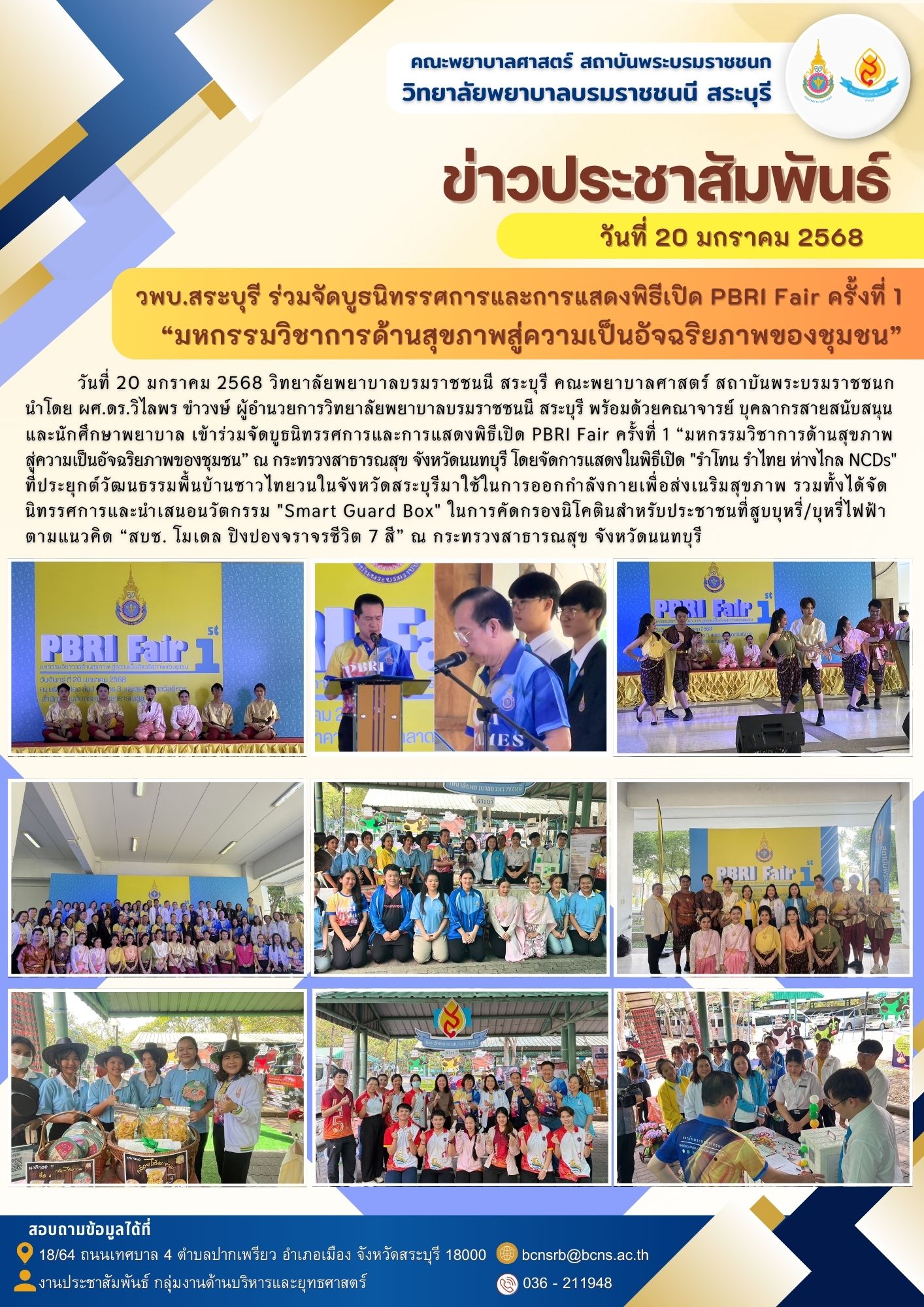
Figure 1 Saraburi college’s official newsletter documenting its PBRI Fair exhibition and demonstration, 20 January 2025.
Sources: Official activity record | Official newsletter image
Emergency care learning in a northern school
Boromarajonani College of Nursing, Chiang Mai
12 September 2025 | Pupils at a Border Patrol Police school
Boromarajonani College of Nursing Chiang Mai delivered emergency-care learning at Chao Phor Luang Uppatham 2 Border Patrol Police School in Phrao district on 12 September 2025. Its Academic Service and Learning Center worked with the Northern Branch of the Nurses Association of Thailand. Instructors taught basic cardiopulmonary resuscitation and automated external defibrillator use to upper-primary pupils.
The activity brought a defined practical lesson to learners at an external school. PBRI’s published evidence places it within a northern programme involving 26 Border Patrol Police schools; that number describes the wider programme, not schools visited on this day. The case illustrates an interpreted connection to SDG 3 through emergency preparedness and to inclusive access to learning. No pupil count or assessed competency result is reported for this visit.
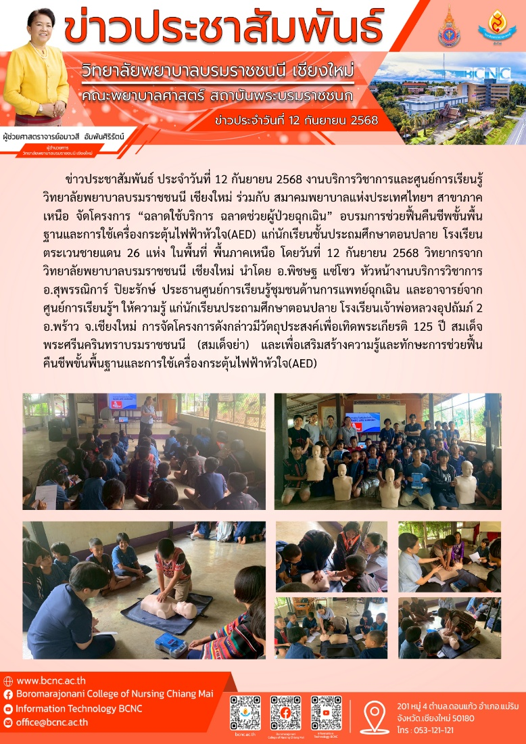
Community health education at Ban Krabak
Srimahasarakham Nursing College
16 July 2025 | Residents and community health volunteers
Srimahasarakham Nursing College delivered a community health-education workshop at Ban Krabak commemorative health station in Chuen Chom district, Maha Sarakham, on 16 July 2025. The activity combined health screening with a workshop on the college’s 3 Or 3 Reductions health-behaviour framework under the PBRI Model. It formed part of a programme to strengthen community primary-care management.
The linked official gallery shows community health volunteers attending a classroom session. This teaching component made health-related knowledge available at a community venue, providing an interpreted connection to prevention under SDG 3 and to lifelong learning. The educational evidence is the documented workshop rather than screening alone. The source does not publish an attendance denominator, learning-test scores or a measured change in health outcomes.
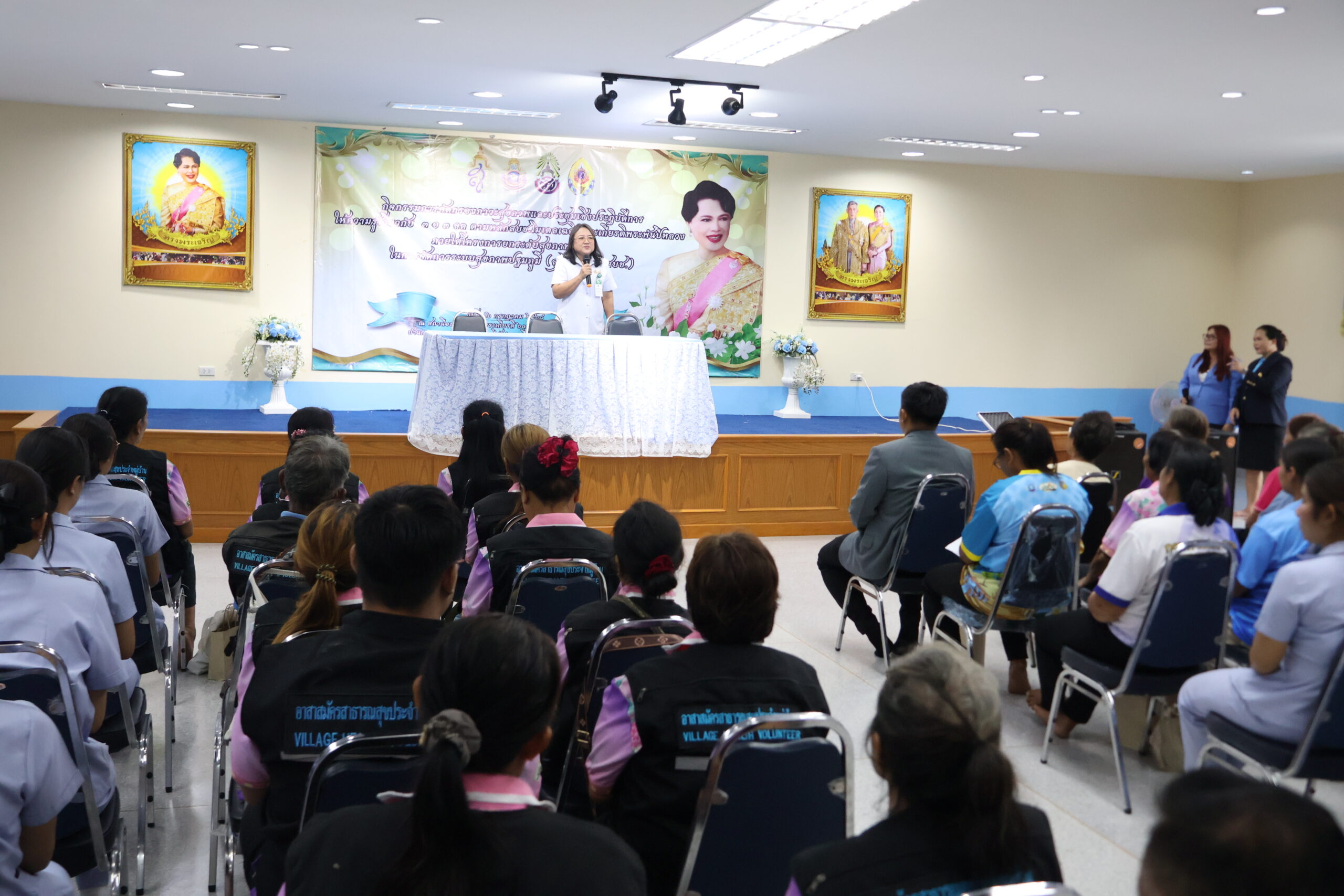
Health promotion learning for older residents
Boromarajonani College of Nursing, Udon Thani
28 January 2025 | Older community members
Boromarajonani College of Nursing Udon Thani reported a community activity on 28 January 2025 combining older-person health assessment with health-promotion teaching. Its Centre of Excellence in Primary Care worked with the adult and older-person nursing subject group, the cultural-preservation function and second-year nursing students from cohort 32. The activity formed part of a programme for strengthening community primary-care management.
The official newsletter shows older residents listening to presenters and taking part in group activities. Its stated knowledge-sharing element extends college expertise to a wider community audience and is interpreted here as contributing to SDG 3 and inclusive lifelong learning. The record identifies educational delivery, while leaving the precise lesson topics, attendance total and learning gains unspecified.
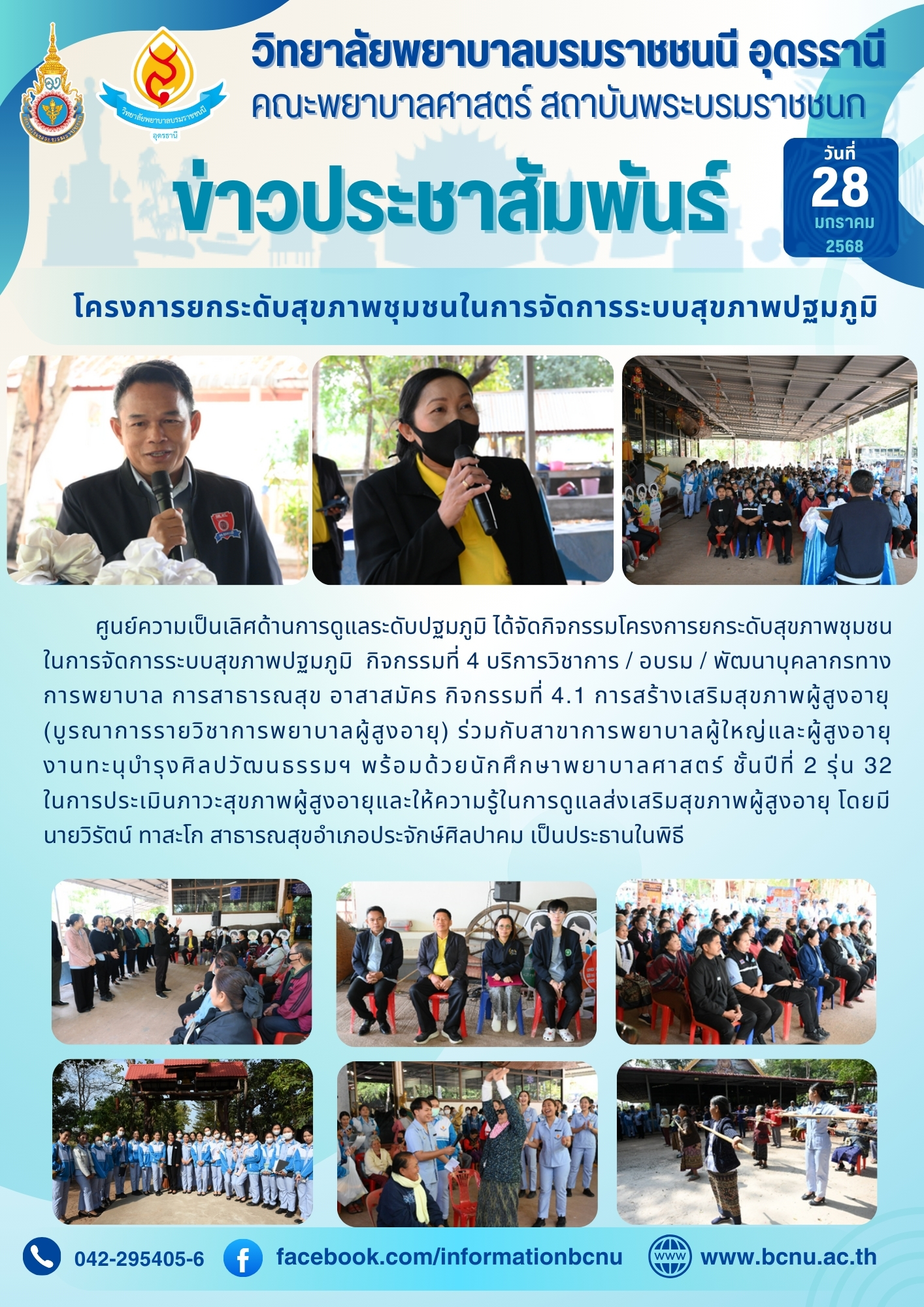
Practical emergency skills for school pupils in Trang
Boromarajonani College of Nursing, Trang
19 September 2025, 13:00–16:00 | 27 pupils plus school personnel
Boromarajonani College of Nursing Trang and the Nurses Association of Thailand delivered practical emergency-care education at Santi Rat Pracha Bamrung Border Patrol Police School in Palian district on 19 September 2025. The three-hour session involved school personnel and 27 pupils, comprising 17 in Grade 5 and ten in Grade 6. College lecturers, staff and nursing students supported the outreach.
Instruction covered cardiopulmonary resuscitation, automated external defibrillator use, choking, initial care and movement of people with fractures, and venomous animal bites. The newsletter connects the project with extending useful knowledge and skills to remote communities. This defined external-school lesson has an interpreted relationship to SDG 3 and equitable access to practical learning. The 27-pupil count excludes school personnel and the college team; no assessed learning gain is reported.
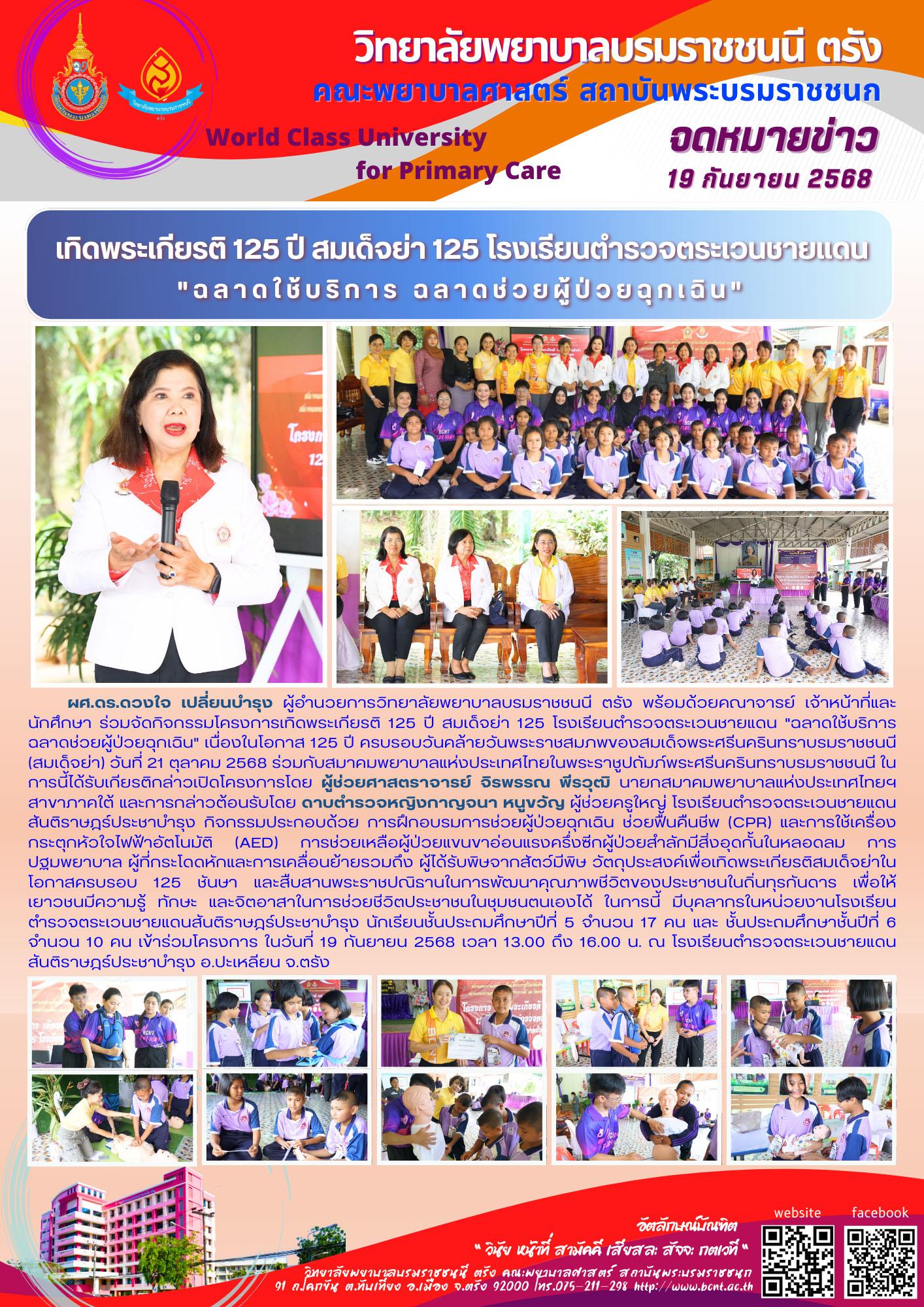
Continuing education for municipal caregivers
Boromarajonani College of Nursing, Trang
11 February 2026 | A reported target group of 49 caregivers
Boromarajonani College of Nursing Trang and Trang City Municipality organised caregiver development at the college on 11 February 2026. The municipal public-health and environmental division, through its older-person health-promotion work, partnered with college specialists to share knowledge and practical experience. The newsletter identifies a target group of 49 caregivers working with dependent people in the municipal area.
Teaching addressed physical, psychological, emotional and social aspects of older-person care. The activity extended continuing education to adults already providing care in the wider community. Its stated purpose was to help participants apply knowledge appropriately and strengthen caregiving skills, giving an interpreted connection to SDG 3 and lifelong learning. The 49-person figure is the reported target group, not a verified completion or pass count; subsequent care outcomes are not reported.
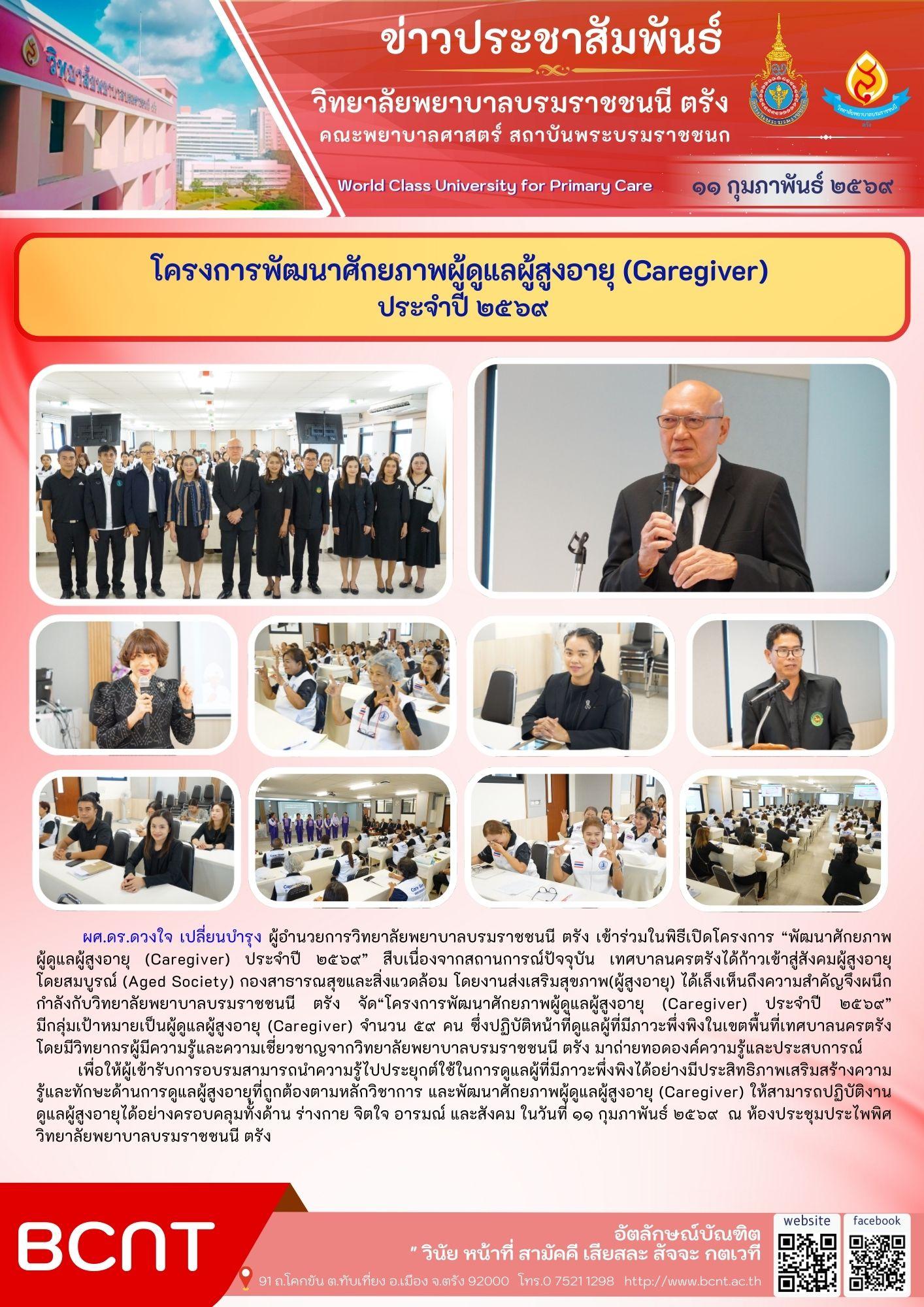
17.4.4 Student Sustainability Literacy
Evidence attachment for SDG 17 criterion 17.4.4 | Public records reviewed through 6 November 2026 PBRI-affiliated colleges document several forms of environmental learning and assessment. The direct example presented here is student-specific Green Office knowledge testing at Boromarajonani College of Nursing Suratthani in 2025. Supporting records from Phitsanulok describe an assessment objective and a research publication issued in 2026. These college-level records measure different constructs and are not combined into a PBRI-wide sustainability literacy score.
What the records establish
|
Record |
Assessment focus |
Evidence status |
| Suratthani 2025 | Environmental knowledge before and after training | Direct student testing record |
| Phitsanulok 2025 | Environmental understanding as a programme objective | Supporting programme record |
| Phitsanulok publication 2026 | Attitudes and self-reported waste separation behaviour | Supporting research record |
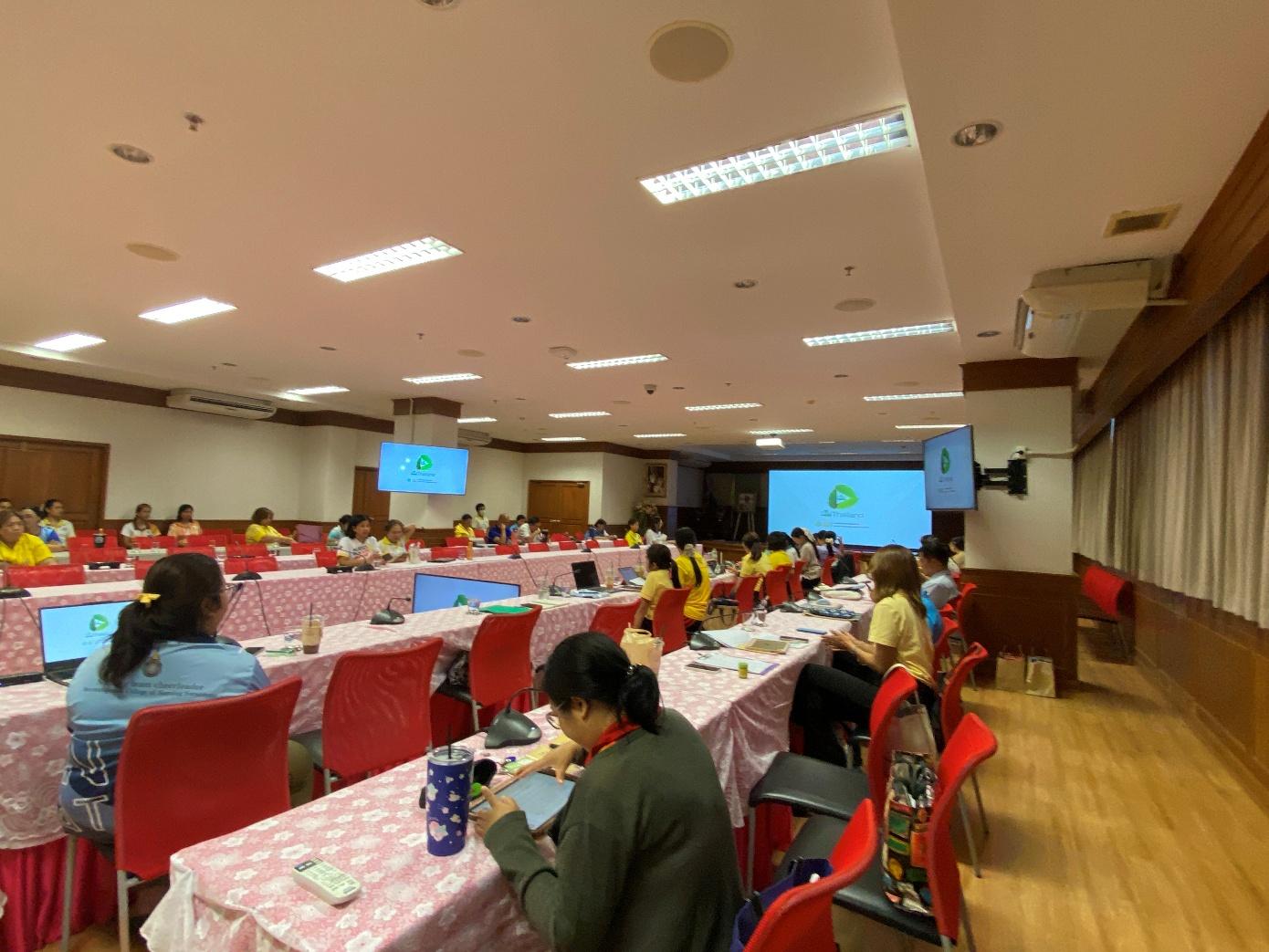
Green Office training in the college’s 2025 implementation file. This programme photograph is not identified as the 27 August student test cohort.
Student knowledge testing in Suratthani
Boromarajonani College of Nursing Suratthani | Green Office programme 2025
The college’s signed summary reports 559 student assessment records, with 203 classified as passing the pre-test and 559 the post-test. Student appendices are dated 27 August 2025; the training overview separately lists 29 to 30 April and 22 July. These dates identify programme records rather than a single verified session for all tests.
|
Student classification |
Pre-test |
Post-test |
| Recorded student assessments | 559 | 559 |
| Classified as passing | 203 | 559 |
| Classified as not passing | 356 | – |
Counts reproduce the student row of the college summary; the dash is retained from the source. The summary states a 70% benchmark, but appendix operators and some classifications are inconsistent. These results are not independently recalculated. Aggregate mean scores and the claimed percentage gain are not used. Student specific pre-test and post-test covers corroborate the knowledge-testing process. Scored appendices use a 30-point maximum; the public covers do not show the questions or item count. Teaching topics include energy and resource efficiency, pollution and waste, green procurement, greenhouse gases, carbon neutrality, net zero and zero waste.
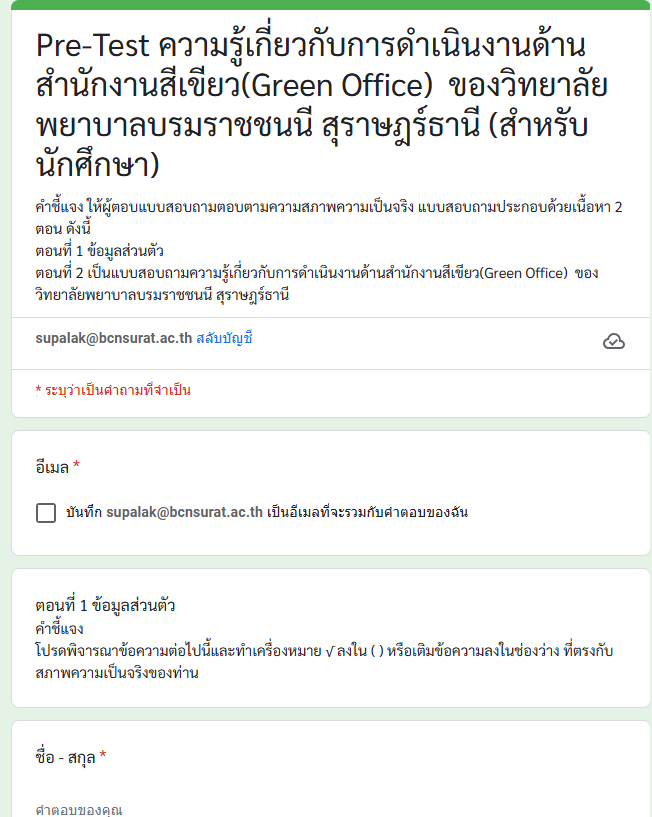
Public student pre-test cover at left and post-test cover at right. These blank form screens identify the instruments; they do not disclose the question bank.
Environmental understanding in Phitsanulok
Sirindhorn College of Public Health Phitsanulok | Green and Safety College programme 2025
The college’s Green Office page describes a 2025 programme intended to provide knowledge and assess understanding of environmental communication, awareness, behaviour change, energy reduction and greenhouse gas reduction. The original photographs show students attending a learning session. Their image metadata dates the session photographs to 6 March 2025; the webpage was published in April 2025 and updated in June 2026.
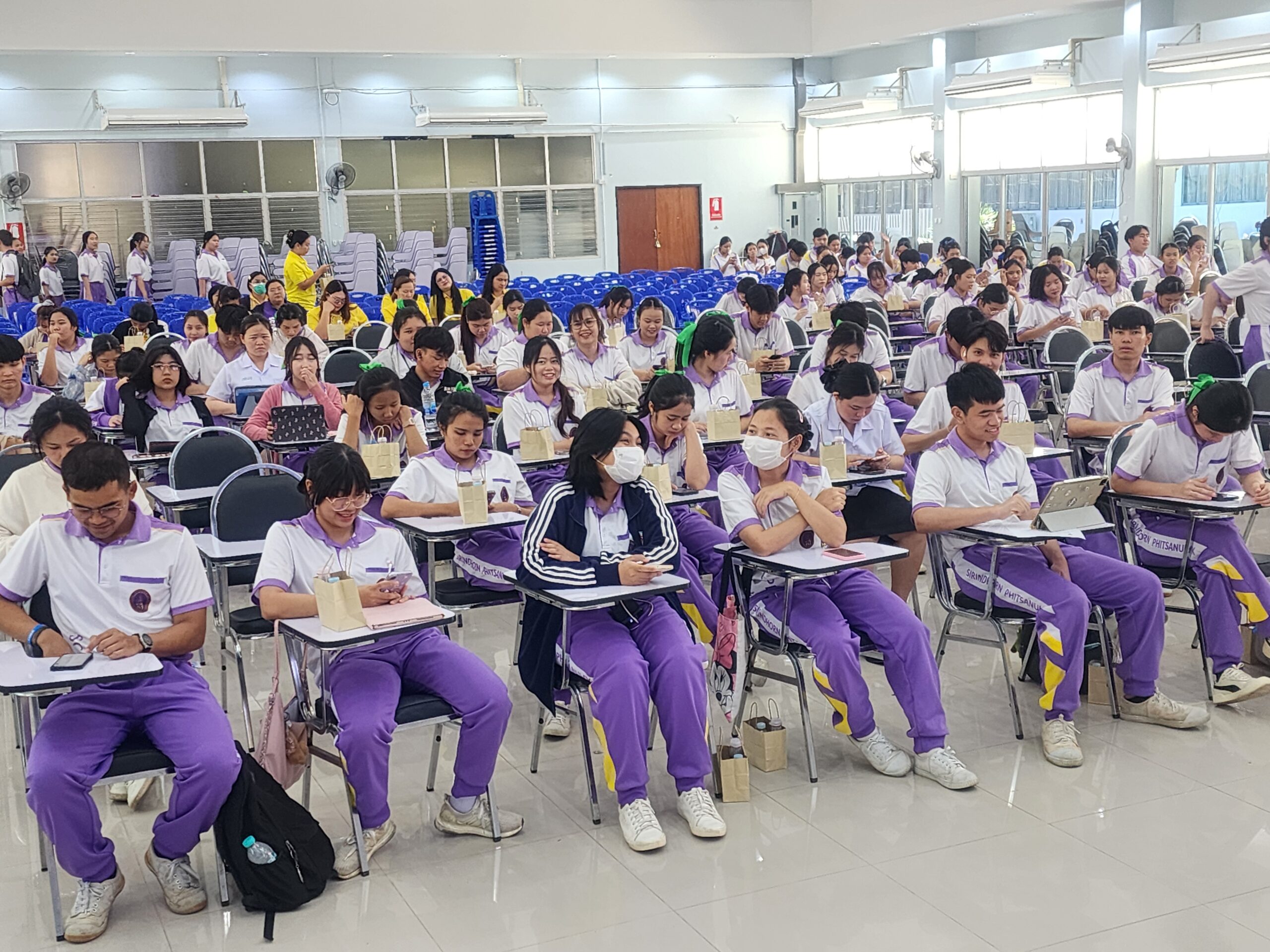
Students attending the Green and Safety College learning session. The photograph documents participation, not test administration or a knowledge score.
This record supports the presence of environmental learning and an assessment objective at a second college. It does not publish test items, assessment coverage or student results. It therefore complements the Suratthani testing record without establishing a second measured literacy result.
Sources: Official Green Office programme | Original photograph
Environmental behaviour research published in 2026
Sirindhorn College of Public Health Phitsanulok | Published 29 June 2026
A research paper examined a plastic-waste separation programme among 98 female dormitory residents enrolled in academic year 2024. Intervention and control groups each contained 49 students. Four 12-item rating scales assessed attitudes, subjective norms, intentions and self-reported behaviour. The programme lasted four weeks, followed by a further measurement 12 weeks after completion.
| Intervention group behaviour score | Mean | Standard deviation |
| Before the programme | 3.67 | 0.60 |
| Reported post-programme measurement | 4.34 | 0.62 |
These are self-reported environmental behaviour scores, not objective sustainability knowledge or retention scores. The paper is a 2026 publication; exact calendar fieldwork dates are not stated. Its cohort should not be described as a 2026 student cohort. The study provides supplementary evidence of measuring a sustainability-related behavioural domain.
Sources: Research article and publication date | Full paper
Assessment scope
The Suratthani record demonstrates a college-level pre-test and post-test of environmental knowledge. Broader sustainability literacy also concerns learning and retaining key sustainability concepts. Evidence from one college and one environmental domain does not establish representative coverage across PBRI, all SDGs or long-term retention. Programme attendance and self-reported behaviour remain distinct from knowledge testing.
Sources: THE Sustainability Impact Ratings Methodology 2026 page 192
Primary source access
The Suratthani files are linked from the college’s official Green Office portal under category 2, year 2568, training and knowledge activities. This attachment reproduces aggregate classifications and blank test covers; it does not reproduce individual student names, identifiers or marks.
Sources: Official college | Green Office portal | 2025 evidence folder
The overview has not been added yet.
No report files are available yet.
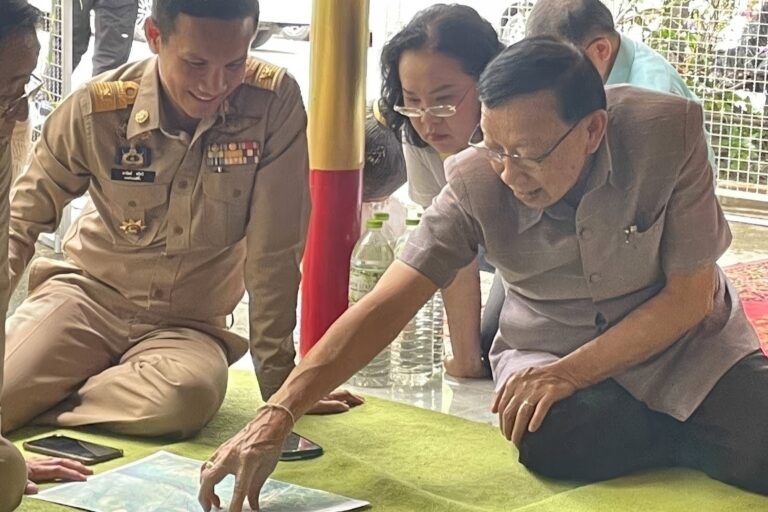
No related links are available yet.


