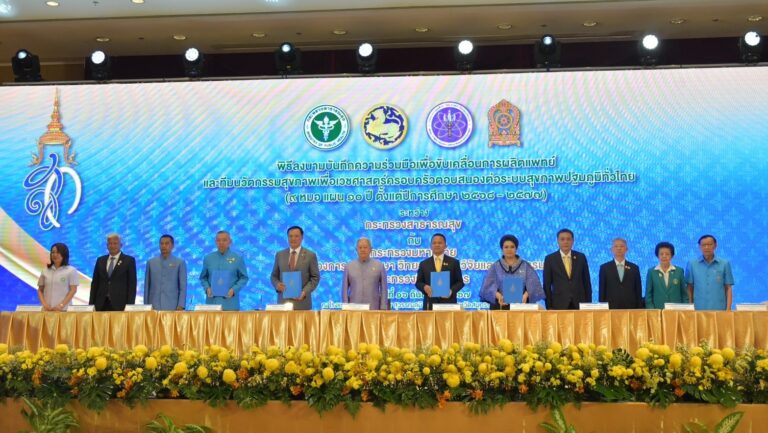
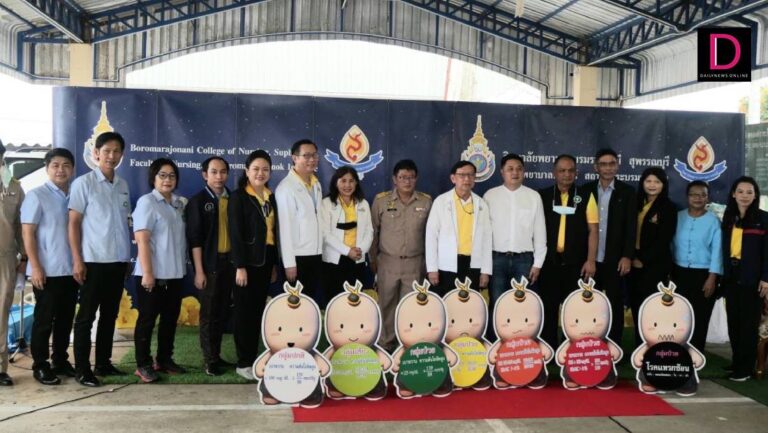
 The Nine Doctors pathway from medical training to community care317

PBRI SUSTAINABILITY
Policy
Guidelines for Preventing and Addressing Sexual Abuse or Harassment in the Workplace

Sexual abuse or harassment in the workplace and in educational settings violates human dignity and individual rights and freedoms. It also affects the working and learning environment, physical and psychological safety, and the effectiveness of work performance and educational provision, and may cause harm to the organization as a whole.
Praboromarajchanok Institute, as a government agency with a mission to educate and develop medical and public health personnel, recognizes the importance of promoting morality, ethics, and public service in accordance with the principles of good governance. It also recognizes the importance of protecting the rights and dignity of personnel and students, ensuring that they are treated fairly, are safe, and are free from all forms of sexual abuse or harassment through a systematic and effective approach with clear guidelines. The Institute therefore considers it appropriate to establish these Guidelines for Preventing and Addressing Sexual Abuse or Harassment in the Workplace for Personnel and Students of Praboromarajchanok Institute. The guidelines provide a framework for prevention, monitoring, receiving complaints, and addressing problems appropriately, transparently, and fairly. They aim to create a working and educational environment that respects human dignity, promotes equality and safety for everyone, and strengthens confidence in the Institute’s management system, thereby contributing to sustainable organizational development.
Definition of Sexual Abuse or Harassment
Sexual abuse or harassment means any act or sexually suggestive behavior involving coercion or an unwelcome exercise of power, expressed through speech, messages, gestures, sounds, images, documents, electronic data, sexually obscene materials, or other similar acts, in a manner likely to cause another person distress, annoyance, embarrassment, or a sense of being demeaned. It also includes stalking or any act that creates an environment in which people feel unsafe in relation to sexual conduct, particularly through the imposition of conditions affecting employment, recruitment, or appointment, or causing any other impact on the affected person, whether within or outside the Institute. Sexual abuse or harassment shall be regarded as unacceptable and should not occur at Praboromarajchanok Institute.
Recommended Conduct for Preventing Sexual Abuse or Harassment
- Students and personnel should treat students, faculty members, colleagues, supervisors, subordinates, and other persons, both within and outside the Institute, with respect.
- Students and personnel of the Institute should reduce the risk of sexual abuse or harassment, for example by dressing appropriately and avoiding secluded places or being alone with a supervisor, subordinate, other person, or someone they do not know well, whether of the opposite or the same sex. Where necessary, a trusted person should be present.
- Students and personnel should help monitor and report any sexual abuse or harassment they witness at Praboromarajchanok Institute to the relevant persons or units. They should not ignore such problems when they affect students or colleagues, and should also provide advice and assistance to colleagues.
- Supervisors at all levels and faculty members should set a good example and have a direct duty to prevent sexual abuse or harassment within their units.
- If a supervisor asks a subordinate to work alone with them in a room, particularly outside normal working hours, or to travel alone with them on work assignments to another province or abroad, the immediate supervisor must always be informed in advance.
- Students and personnel should have a sense of dignity, take pride in themselves, and recognize their own worth.
Unwelcome Conduct That Constitutes Sexual Abuse or Harassment
Sexual abuse or harassment covers a broad range of conduct, and it is not possible to provide an exhaustive list of behaviors. Nevertheless, it should be recognized that sexual conduct which the affected person does not want and which causes distress, annoyance, discomfort, embarrassment, or a sense of being insulted or demeaned constitutes sexual abuse or harassment. Examples include the following:
- Visual conduct, such as:
Staring at another person’s body in a sexually suggestive manner; looking up a skirt; looking at someone’s chest or down their neckline; or looking at the crotch of their trousers in a way that makes the person being looked at feel uncomfortable, embarrassed, or uneasy, or causes other people in the vicinity to feel the same way.
- Verbal conduct, such as:
2.1) Making sexually suggestive comments about a person’s body, figure, or clothing.
2.2) Inviting someone to engage in any activity in a secluded place when such an invitation is unwelcome and unwanted; telling sexual jokes.
2.3) Flirting, making sexually suggestive remarks, commenting on a person’s figure, using obscene language, making obscene telephone calls, addressing a person using sexually suggestive terms, or gathering in a group to comment on another person’s sexual behavior.
2.4) Discussing sex or sexual intercourse; commenting on sexual orientation; making sexually suggestive remarks; asking about sexual experiences or preferences; or fabricating stories or spreading rumors about another person’s sex life.
- Physical conduct, such as:
3.1) Touching another person’s body, fondling, or rubbing against another person’s body in a sexual manner; seizing opportunities to embrace or kiss; teasing through physical contact; seizing opportunities to embrace; and any other unwelcome physical contact, such as pulling someone onto one’s lap.
3.2) Persistently pursuing someone against their wishes; deliberately getting too close; cornering someone or blocking their path; suggestively raising the eyebrows or winking; whistling suggestively; blowing kisses; licking one’s lips; pretending to drool; or making sexual gestures with the hands or through bodily movements.
- Other conduct, such as:
4.1) Displaying sexual images, objects, or messages, including opening pornographic images on electronic devices, whether personally owned or belonging to the Institute.
4.2) Sexual expressions, such as displaying nude calendars or pornographic images; writing or drawing sexual content in public places; using symbols depicting genitalia or sexual intercourse; or communicating sexual messages, images, or symbols over the internet, for example through Facebook, LINE, or other online channels.
- Sexual conduct involving an exchange of benefits, such as:
5.1) Promising benefits, such as grades, scholarships, job positions, salary increases or promotions, or employment contract renewals, if the person subjected to sexual abuse or harassment agrees to have sexual relations; for example, asking the person to stay overnight, have sexual intercourse, or perform other sexual acts.
5.2) Threatening adverse consequences for a person’s studies or work; threatening to cause harm; forcing sexual contact; attempted rape; or rape.
What to Do If Subjected to Sexual Abuse or Harassment
- Regain your composure, immediately make it clear that the conduct is unwelcome, and move away from the sexual abuse or harassment.
- Call out for the person to stop and ask others for help.
- Document the incident through an audio recording, photographs, or a video clip, if possible.
- Make a written record of the relevant events immediately after the incident, noting the date, time, and place; a description of what happened; and the names of witnesses and/or third-party personnel who were referred to or were present during the incident.
- Immediately inform a trusted person of the problem.
- Discuss the incident with colleagues, friends, or the relevant units, and personally report the problem to your academic adviser, supervisor, or the responsible unit. A friend may act as an adviser or accompany you.
- If the affected person feels embarrassed or afraid, they may authorize another person to act on their behalf.
Informal Resolution Process
An informal process shall be used as the first step in resolving sexual abuse or harassment.
- Actions to be taken by a person subjected to sexual abuse or harassment
1.1) Where the matter can be resolved personally, speak or write to the affected person [1] to inform the person responsible that the conduct is unacceptable and request that it stop. The affected person may ask someone to accompany them or speak on their behalf.
1.2) Where the matter cannot be resolved personally, take the following steps:
For students
- Seek assistance from an academic adviser following the incident, and have the adviser coordinate with the relevant units.
- Request that the relevant unit provide a coordinator to assist in arranging a meeting among the parties concerned to find an informal resolution, or provide a mediator to help resolve the matter.
For personnel
- Seek assistance from a supervisor following the incident. The supervisor shall ascertain the facts within 15 days. If no action is taken, the supervisor shall be considered to have neglected their duties. The supervisor shall also coordinate with the relevant units for further action.
- Actions to be taken by supervisors or the responsible units
- The head of the unit (the President, Dean, or College Director) shall appoint a fact-finding working group of no more than five members. The group shall include a chairperson holding a position higher than those of the parties concerned, and members from the parties’ own units who hold positions no lower than those of the parties concerned. The group may include at least one person of the same sex as the affected person. A person trusted by the affected person shall be permitted to attend and listen during the fact-finding proceedings. Alternatively, the Governance and Ethics Committee of Praboromarajchanok Institute shall conduct the fact-finding. The findings shall be reported to the head of the relevant unit. If disciplinary action is required, the working group shall submit the information to management for use in the disciplinary proceedings.
- Examine the facts thoroughly and carefully, and inform the complainant of the measures to resolve the matter within 30 days. If the process is not completed within that period, an extension of a further 30 days may be granted.
- Provide advice or support to the complainant and the accused on an equal basis. The accused shall not be considered guilty unless the allegations have been substantiated and the misconduct has been proven.
- Act as an intermediary in informal and confidential negotiations to resolve the matter, taking appropriate measures. These may include speaking with the person responsible to ensure that sexual abuse or harassment does not recur; arranging settlement discussions between the parties with the consent of both parties; referring the matter to a higher-level supervisor; or keeping the parties apart, with the consent of the affected person, so that they do not encounter one another.
- Once an agreement has been reached, both parties shall sign a written memorandum of agreement, which shall be retained in each party’s records.
- Protect the complainant against bullying or retaliation and ensure that the complainant is not subjected to any action that adversely affects their education, work duties, or daily life.
- Provide advice or support to the complainant and the accused on an equal basis. The accused shall not be considered guilty unless the allegations have been substantiated and the misconduct has been proven.
Units Receiving Complaints within the Institute
For students
- The student’s academic adviser.
- The student affairs unit of the relevant faculty or college.
For personnel
- Legal Affairs Division, Office of the President.
- Complaint submission website: https://law.pi.ac.th/news_view.php?n_id=906
- E-mail: complaint.law@pi.ac.th
- In-person submission: Legal Affairs Division, Praboromarajchanok Institute.
(No. 88/20, Office of the Permanent Secretary, Ministry of Public Health Building, Tiwanon Road, Talat Khwan Subdistrict, Mueang District, Nonthaburi 11000.)
Unit Receiving Complaints outside the Institute
- Coordination Center for the Prevention and Resolution of Sexual Abuse or Harassment in the Workplace (Thai abbreviation: ศปคพ.), Department of Women’s Affairs and Family Development.
Complaint Channels and Procedures
Units should provide channels for receiving complaints, such as telephone, post, e-mail, websites, and complaint boxes.
- Students and personnel may file a complaint themselves or authorize another person to act on their behalf. Complaints may be made verbally or in writing, through channels such as telephone, post, e-mail, websites, and complaint boxes.
- Students and personnel should submit complaints to the complaint-receiving units within the Institute and follow the process through to completion. If no action is taken, they should then submit the complaint to another person or agency.
Guidelines on Prevention and Assistance for Students
The guidelines on prevention and assistance in cases of sexual abuse or harassment involving students comprise the following:
- Student Discipline: Student Affairs Division
1.1 Conduct publicity through the Student Affairs Division’s online communication channels to raise awareness and a sense of responsibility, encourage restraint from engaging in sexual abuse or harassment, and make students aware that sexual abuse or harassment constitutes a student disciplinary offense carrying a maximum penalty of termination of student status.
1.2 Receive complaints and provide preliminary advice on student discipline where students are unfamiliar with the procedures following an incident of sexual abuse or harassment. Coordinate with the relevant unit or the Legal Affairs Division so that appropriate further action can be taken.
- Physical Health: Student Health Services Unit, Student Affairs Division
The unit shall take the following actions:
2.1 Provide preliminary advice where sexual abuse or harassment has physical consequences, such as rape. Advise the student to undergo an immediate medical examination at a hospital to prevent pregnancy or sexually transmitted infections, and to obtain advice from a physician, including guidance on how to monitor their own condition thereafter.
2.2 Provide preliminary guidance on self-monitoring and self-care, and continue to follow up on symptoms as appropriate.
- Mental Health: Counseling Unit, Student Affairs Division
The Counseling Unit has a mental health care system for students of Praboromarajchanok Institute. This includes care for students who have experienced sexual abuse or harassment that affects their mental health, in both routine and emergency situations, with periodic follow-up.
Guidelines on Prevention and Assistance for Personnel
Complaints shall be considered by the Complaint Review and Adjudication Committee. Personnel who require legal advice may contact the Legal Affairs Division, Office of the President, directly. These proceedings shall be conducted confidentially, with protection provided to complainants, persons providing information, and witnesses in accordance with the law.
Related News
Policy on Promoting Personnel Well-being at Praboromarajchanok Institute (Work-Life Balance)
5
8
10
Read news →
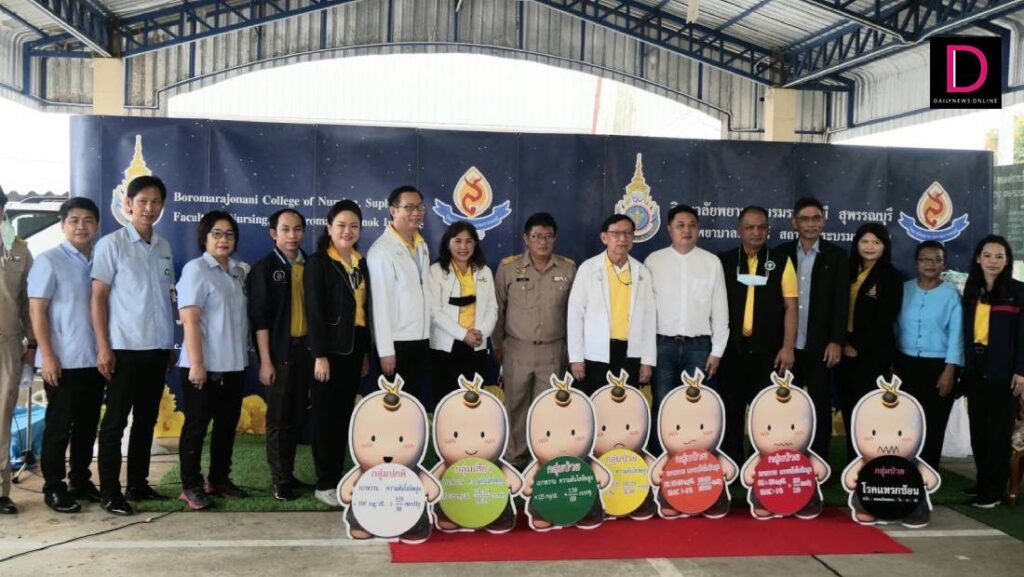
Educational Philosophy of Praboromarajchanok Institute
4
Read news →
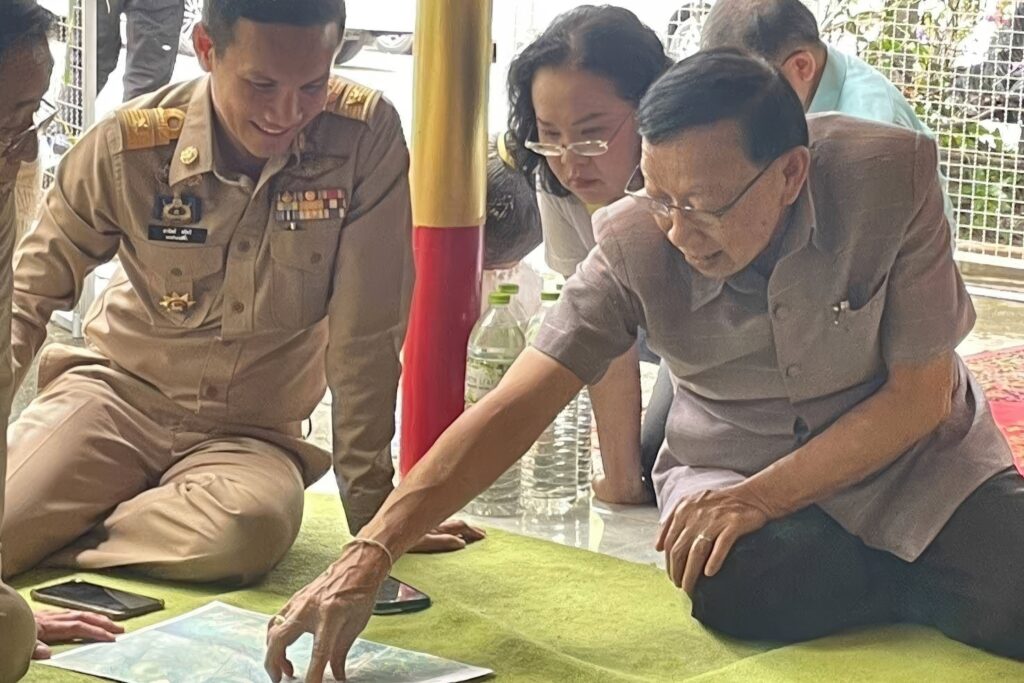
Policy on Advancing Praboromarajchanok Institute towards a World-Class University for Primary Care
3
4
5
10
17
Read news →
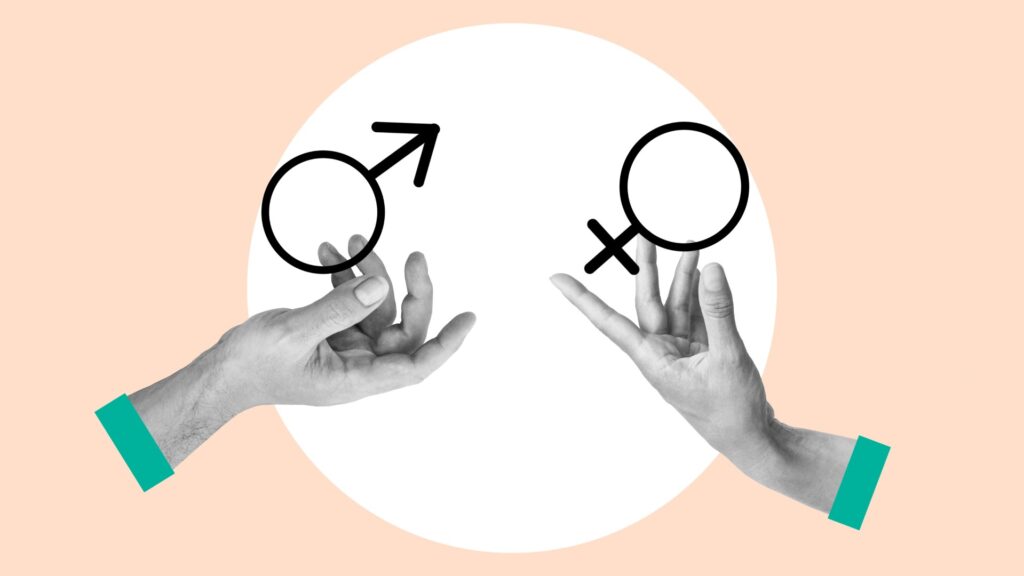
Gender Equality Policy, B.E. 2569 (2026)
5
8
10
16
Read news →

Praboromarajchanok Institute Regulations on the Code of Conduct for Institute Personnel, B.E. 2566 (2023)
5
8
10
16
Read news →


